Starting a fitness journey often feels overwhelming, especially when you are juggling a career, family, and social obligations. After 50 years in the weight loss and nutrition industry, I have seen thousands of people freeze up at the thought of joining a gym.
The good news is that you do not need expensive memberships or complicated machinery to get healthy. With the right beginner home workout plans, you can build strength, lose weight, and improve your cardiovascular health right in your living room.
Whether you are 25 or 55, the secret to success is not intensity; it is consistency. These plans are designed to be accessible, safe, and effective for health-conscious adults who are ready to prioritize their well-being. Let’s dive into the routines that will transform your health without turning your life upside down.
Why Choose Home Workouts?
For many of us, the most challenging part of exercising is simply getting to the gym. Removing that travel time makes it much easier to stick to a routine. Home workouts eliminate the “gymtimidation” factor, allowing you to focus entirely on your form and breathing without feeling watched.
Convenience and Flexibility
When your gym is in your living room, you can exercise whenever it fits your schedule. You can squeeze in a session before work, during a lunch break, or after the kids go to bed. This flexibility is crucial for maintaining a long-term habit.
Cost-Effective Fitness
Gym memberships and commuting costs add up quickly. Home workouts often require little to no equipment, making them a budget-friendly way to achieve your health goals. You can achieve incredible results using just your body weight and gravity.
7 Best Beginner Home Workout Plans
These seven plans cover a range of fitness styles, from strength training to flexibility. Please choose the one that excites you the most, or rotate through them to keep things interesting.
1. Bodyweight Strength Training
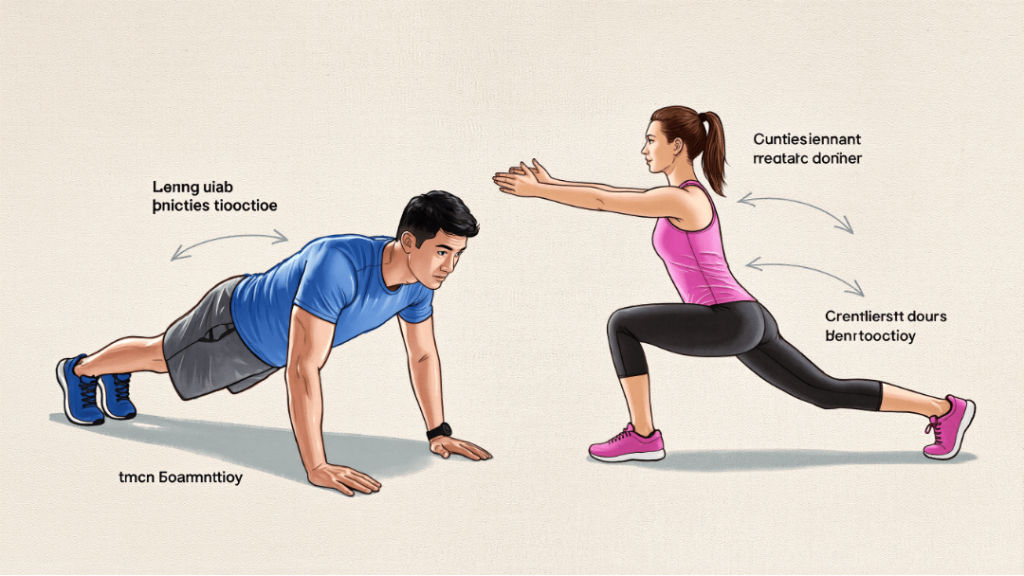
This routine focuses on building muscle and bone density using your own body weight. Strength training is vital for increasing metabolism and preventing age-related muscle loss.
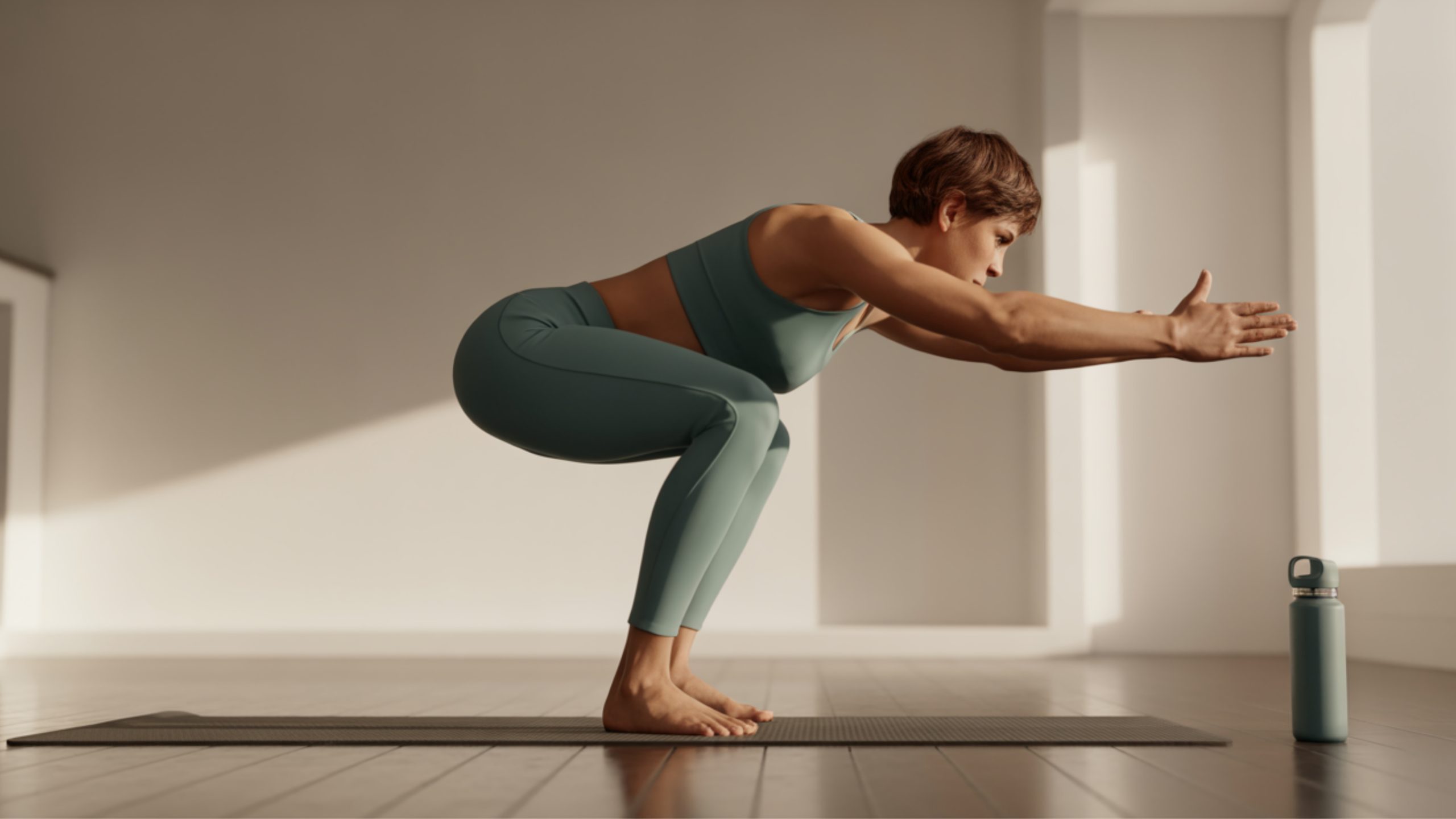
- Squats: 3 sets of 12 reps (Use a chair for support if needed)
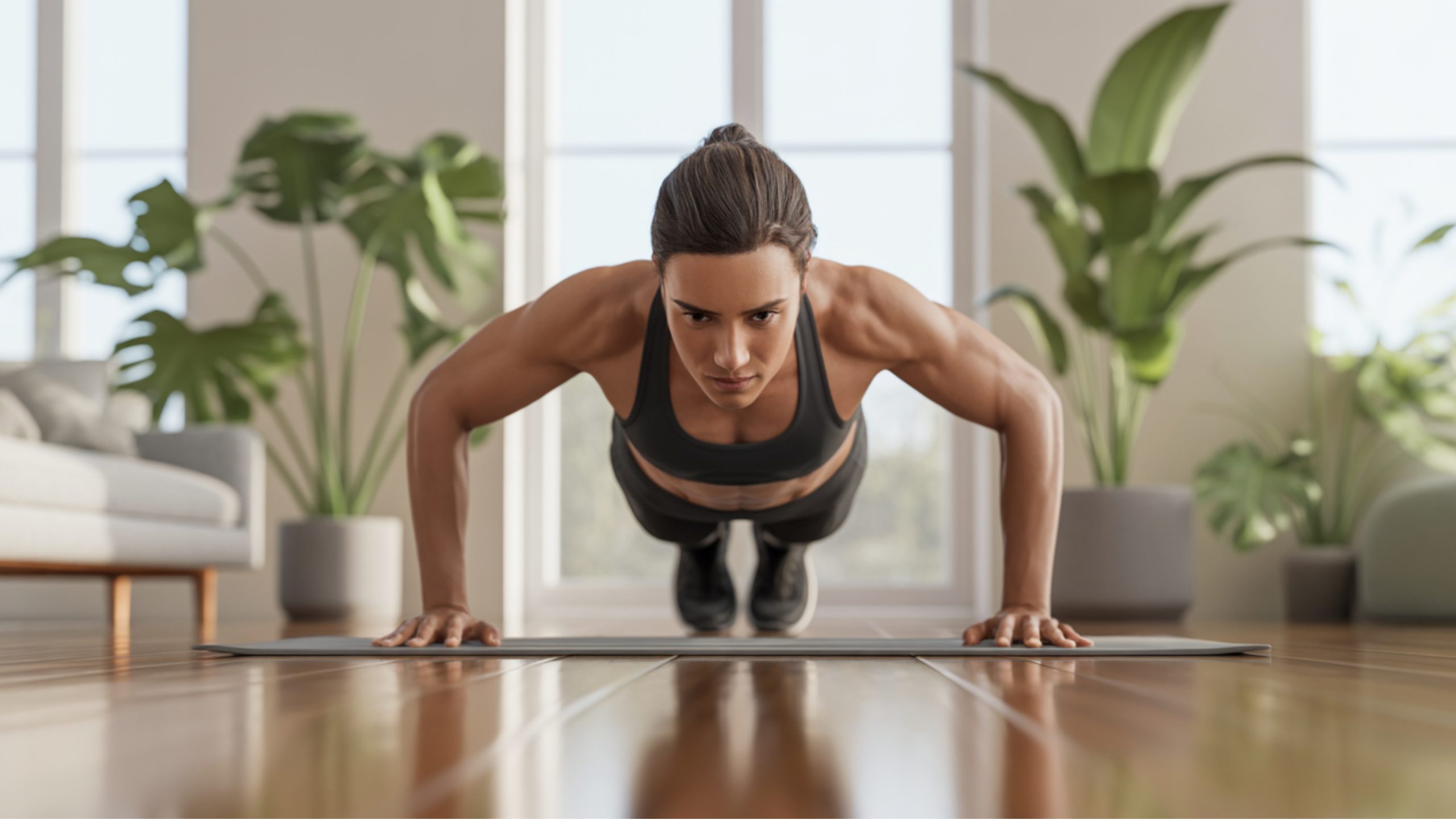
- Push-ups: 3 sets of 10 reps (Modify on knees or against a wall)
- Lunges: 3 sets of 10 reps per leg
- Plank: Hold for 20-30 seconds, 3 times
2. Low-Impact Cardio Routine
Perfect for those with joint concerns, this plan boosts heart health without the pounding of running.
- Marching in Place: 2 minutes (lift knees high)
- Step Touches: 2 minutes (step side-to-side, tapping toes)
- Arm Circles: 1 minute forward, 1 minute backward
- Modified Jumping Jacks: 2 minutes (step out instead of jumping)
- Repeat the circuit 3 times.
3. HIIT for Rapid Fat Loss
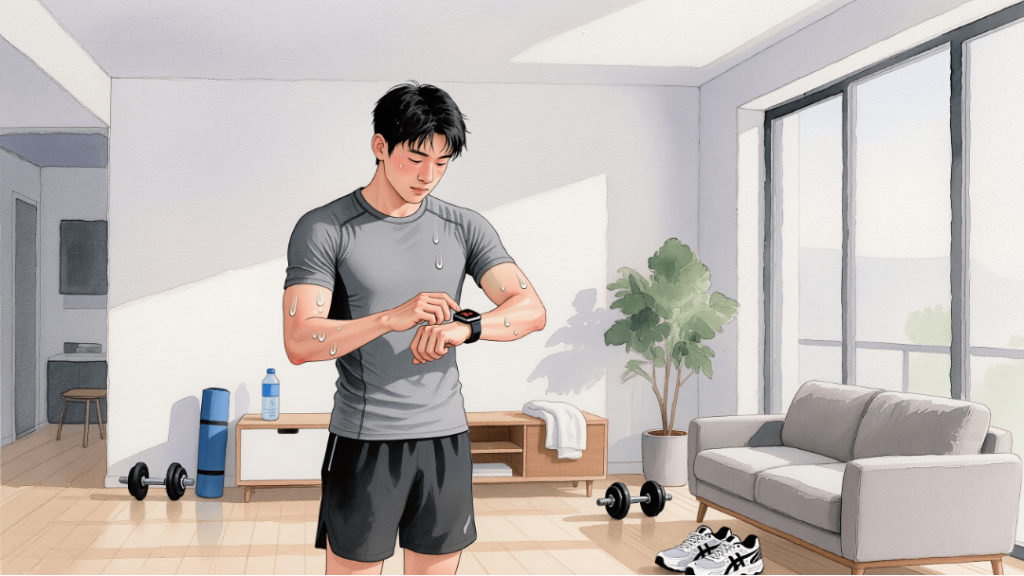
High-Intensity Interval Training (HIIT) alternates short bursts of intense effort with rest. It is highly effective at burning calories in a short time.
- Warm-up: 3 minutes of ilightjogging in place
- Intervals: 20 seconds of hard work, 10 seconds of rest
- Exercises: Burpees (modified), Mountain Climbers, High Knees, Squat Jumps
- Duration: Complete four rounds (approx. 15 minutes total)
4. Yoga Flow for Flexibility
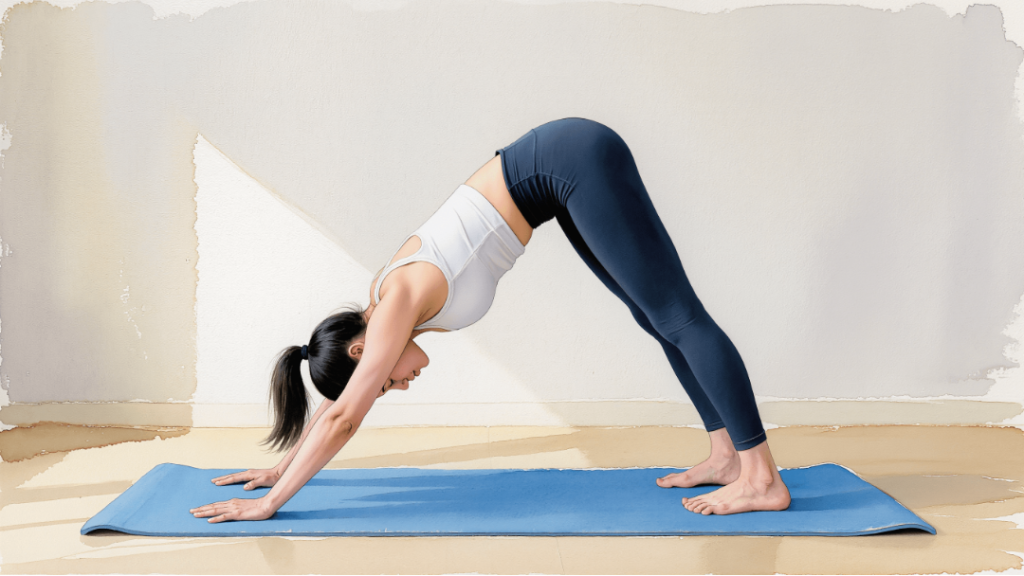
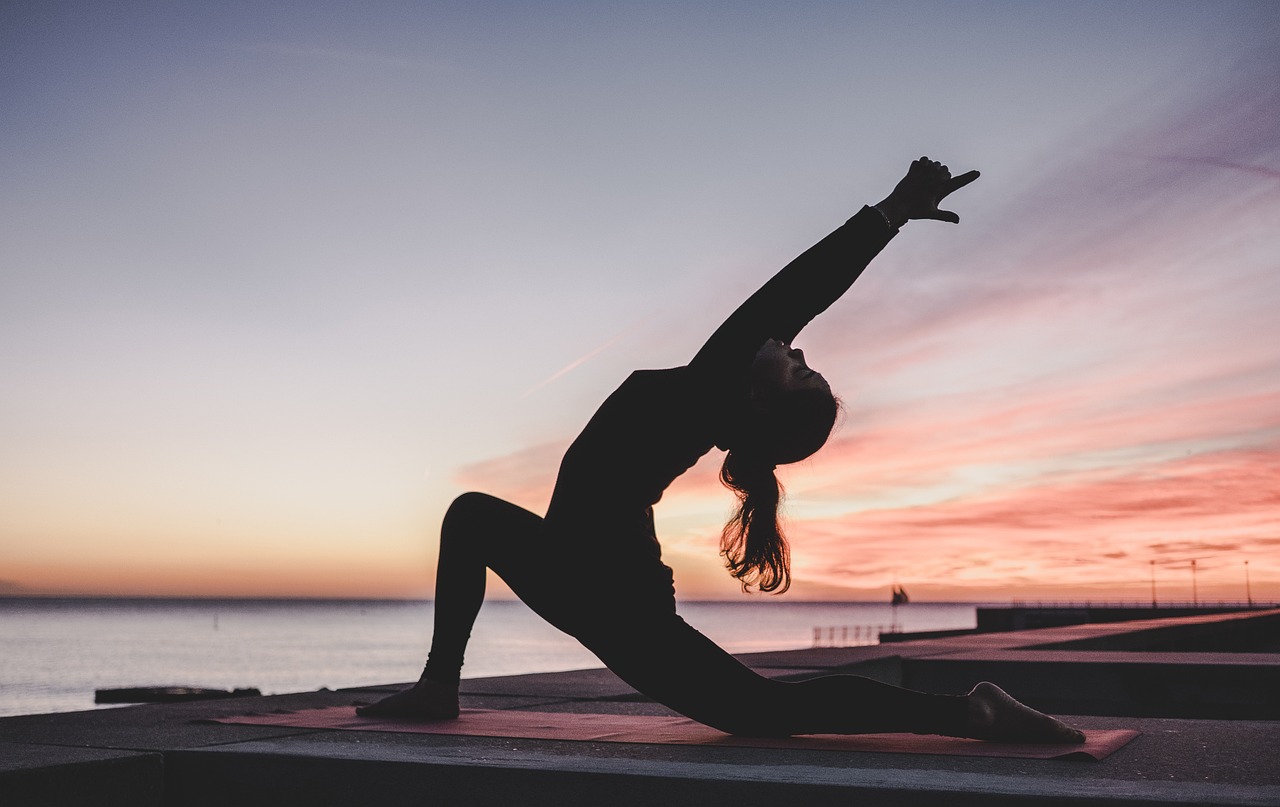
Yoga improves flexibility, balance, and mental stress. This gentle flow is excellent for recovery days or stress relief.
- Child’s Pose: Hold for 1 minute
- Cat-Cow Stretch: 1 minute of flowing movement
- Downward Facing Dog: Hold for 30 seconds
- Warrior II: Hold for 30 seconds on each side
- Corpse Pose (Savasana): 5 minutes of relaxation
5. Pilates Core Strengthening
A strong core protects your lower back and improves posture. Pilates focuses on controlled movements and breathing.
- The Hundred: Pump arms while holding legs in tabletop position
- Glute Bridges: 3 sets of 15 reps
- Leg Circles: 10 reps per leg
- Bird-Dog: 10 reps per side (slow and controlled)
6. Dumbbell Full Body Circuit
If you have a pair of dumbbells, this routine targets every major muscle group.
- Goblet Squats: Hold one weight at chest height (3 sets of 12)
- Overhead Press: Press weights from shoulders to overhead (3 sets of 10)
- Bent-Over Rows: Pull weights toward waist to work back (3 sets of 12)
- Bicep Curls: 3 sets of 12 reps
7. Resistance Band Basics
Resistance bands are affordable and easy to store. They provide constant tension on the muscles, which is excellent for growth.
- Band Pull-Aparts: 3 sets of 15 (great for posture)
- Lateral Band Walks: 3 sets of 10 steps each direction
- Banded Squats: Step on the band, hold handles at your shoulders (3 sets of 12)
- Seated Rows: Wrap band around feet and pull (3 sets of 15)
Essential Equipment for Home Gyms
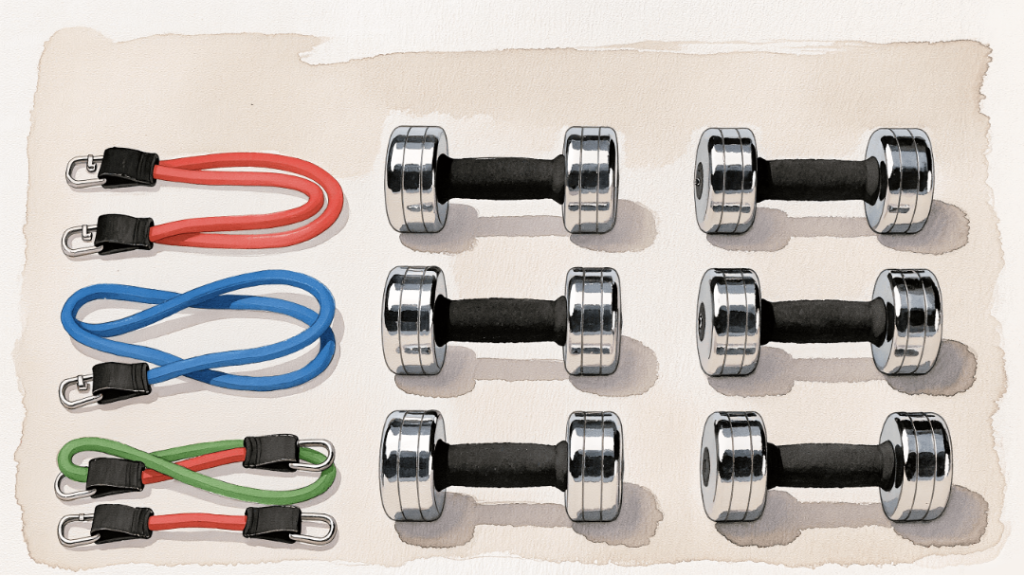
You do not need a fully stocked gym to see results. A few key items can add variety and resistance to your workouts as you get stronger.
Minimalist Gear Setup
Start small with a yoga mat for comfort and stability. A set of resistance bands offers versatility without taking up space. Adjustable dumbbells are an excellent investment because they grow with you as you get stronger.
Staying Motivated at Home
Consistency is the hardest part of working out at home. Without a trainer waiting for you, you need strategies to keep yourself accountable.
Tracking Your Progress
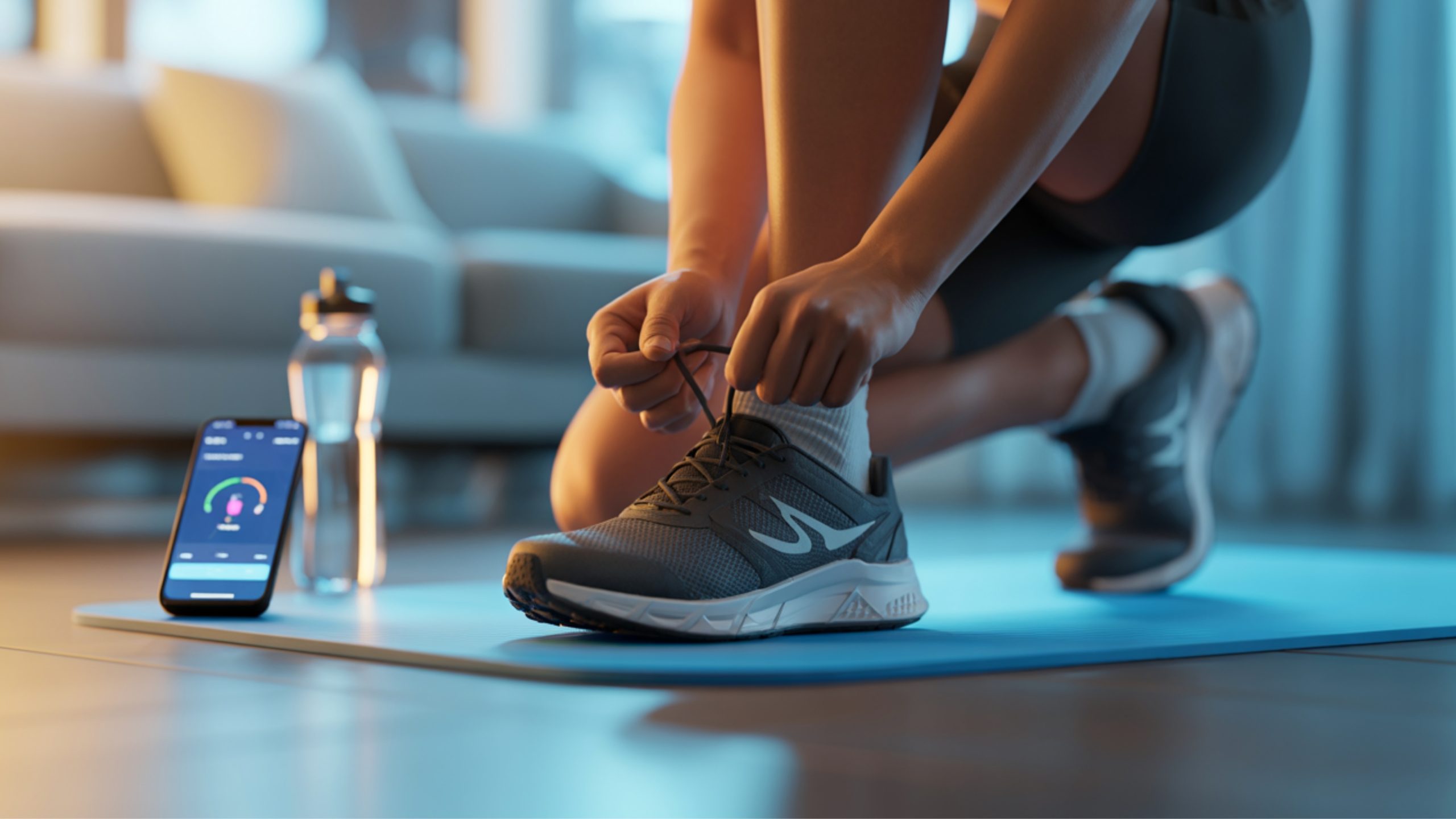
Keep a simple journal or use an app to log your workouts. Seeing that you have completed three workouts this week gives you a sense of accomplishment. Also, track non-scale victories like having more energy or sleeping better.
Safety and Injury Prevention
Safety should always come first, especially when exercising alone. Listening to your body is more important than hitting a specific number of reps.
Importance of Warm-Ups
Never skip your warm-up. Spending 5 minutes doing light movement, such as arm circles or walking in place, prepares your muscles and heart for exercise. This significantly reduces the risk of pulling a muscle or injuring a joint.
Frequently Asked Questions
1. How often should a beginner work out at home?
According to the CDC and ACSM, adults should aim for 150 minutes of moderate activity per week. For beginners, this breaks down nicely to 30 minutes a day, 5 days a week. Consistency is key, so try to spread these sessions out evenly.
2. Can I lose weight with just home workouts?
Yes, you can absolutely lose weight at home. Weight loss occurs when you burn more calories than you consume, and home workouts like HIIT and strength training are excellent calorie burners. Combine exercise with a balanced diet for the best results.
3. Do I need to buy expensive equipment?
No, bodyweight exercises are efficient for beginners. You can get a full-body workout using just gravity, as seen in Plan #1 above. As you progress, affordable items like resistance bands can help increase the difficulty.
4. Is it better to work out in the morning or evening?
The best time to workout is the time you can stick to consistently. Some people prefer the energy boost of a morning session, while others use evening workouts to de-stress. There is no significant physiological difference for general health; habit matters most.
5. How long does it take to see results?
You may feel mental and energy improvements within a week or two. Visible physical changes, such as muscle tone or weight loss, typically take 4 to 8 weeks of consistent effort. Be patient and focus on how you feel.
6. What should I do if I feel sore after a workout?
Mild soreness is typical when starting a new routine; this is called DOMS (Delayed Onset Muscle Soreness). Active recovery, like walking or gentle yoga, can help flush out metabolic waste and ease stiffness. If pain is sharp, however, rest and consult a professional.
7. Can I do HIIT if I am over 50?
Yes, HIIT can be safe for adults over 50, but it should be modified to match your fitness level. The Mayo Clinic suggests that high-intensity exercise is effective for improving heart health in older adults, but always consult a doctor before starting a high-intensity routine.
8. How do I know if I am doing an exercise correctly?
Focus on form over speed or weight. Use mirrors to check your posture against video tutorials from reputable sources. If a movement causes sharp pain, stop immediately and adjust your form.
9. Is yoga considered a “real” workout?
Absolutely; yoga builds strength, flexibility, and balance simultaneously. Harvard Health highlights its benefits for lowering blood pressure and reducing anxiety, making it a comprehensive health practice.
10. What should I eat before a home workout?
Aim for a small snack containing carbohydrates and a little protein about 30-60 minutes before exercising. A banana or a slice of toast with peanut butter provides the fuel your muscles need without weighing you down.
Conclusion
Taking the first step is always the hardest, but you now have seven solid plans to guide you. Remember that fitness is a marathon, not a sprint. By choosing one of these beginner home workout plans and staying consistent, you are investing in a healthier, more energetic future. Listen to your body, celebrate small wins, and do not be afraid to modify exercises to fit your needs.