Starting your fitness journey can feel overwhelming with countless workout options available. The best beginner workout routines focus on fundamental movements, require minimal equipment, and build a sustainable foundation for long-term health. Whether you’re returning to exercise after years away or starting for the first time, these 10 proven beginner workout routines will help you develop strength, improve cardiovascular health, and boost confidence in just weeks.
Research shows that adults who begin structured exercise programs experience improved mental health, better sleep quality, and reduced chronic disease risk within the first month of consistent training. The key to success isn’t intensity—it’s consistency and proper progression that transforms beginners into confident exercisers.
Understanding Beginner Workout Fundamentals
Why Start with Structured Routines
Beginning with structured beginner workout routines prevents injury and ensures balanced muscle development. Random exercises without progression plans often lead to frustration, muscle imbalances, and early dropout rates that affect 50% of new exercisers within six months.
A properly designed beginner program gradually increases exercise difficulty while your body adapts. This approach builds neuromuscular connections, strengthens connective tissues, and establishes proper movement patterns before adding complexity or weight.
Essential Equipment for Home Workouts
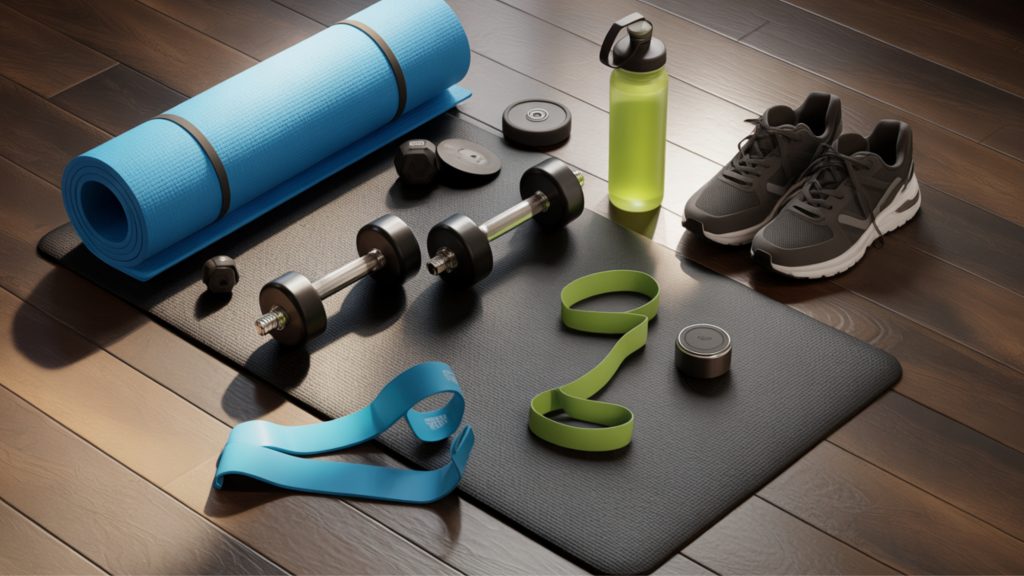
Most effective beginner workout routines require minimal equipment to get started. A yoga mat, comfortable athletic shoes, and a water bottle form the foundation for successful home training sessions.
Optional equipment that enhances variety includes resistance bands ($10-25), a set of dumbbells (8-15 pounds), and a sturdy chair for modified exercises. These affordable additions expand exercise options without requiring gym membership costs that average $58 monthly.
10 Proven Beginner Workout Routines
1. Total Body Bodyweight Circuit
This equipment-free routine targets all major muscle groups in 20-25 minutes. Perform each exercise for 30 seconds with 15-second rest periods between movements.
Complete Circuit (Repeat 3 times):
- Bodyweight squats (lower body strength)
- Modified push-ups on knees (upper body pressing)
- Glute bridges (posterior chain activation)
- Plank hold (core stability)
- Alternating lunges (unilateral leg strength)
- Wall push-ups (beginner chest exercise)
Rest 90 seconds between complete circuits. This foundational routine builds strength without equipment while teaching proper movement patterns for future progression.
2. Walking-Based Cardio Program
Walking represents the most accessible cardiovascular exercise for beginners with joint concerns. Start with 15-20 minute walks at a comfortable pace five days per week.
4-Week Progression:
- Week 1: 15 minutes daily at conversational pace
- Week 2: 20 minutes daily, add 2-minute brisk intervals
- Week 3: 25 minutes daily with 3-minute speed intervals
- Week 4: 30 minutes daily including hills or stairs
This gradual increase prevents overuse injuries while building cardiovascular endurance. Walking improves heart health, supports weight management, and requires zero equipment investment.
3. Foundation Strength Training Split
This three-day routine separates muscle groups for optimal recovery between sessions. Schedule workouts on non-consecutive days (Monday/Wednesday/Friday) with rest days between.
Day 1: Lower Body Focus
- Goblet squats: 3 sets of 10 reps
- Step-ups: 3 sets of 8 reps per leg
- Glute bridges: 3 sets of 12 reps
- Calf raises: 3 sets of 15 reps
Day 2: Upper Body Push/Pull
- Push-ups (modified if needed): 3 sets of 8 reps
- Dumbbell rows: 3 sets of 10 reps per arm
- Shoulder press: 3 sets of 8 reps
- Bicep curls: 3 sets of 12 reps
Day 3: Core and Stability
- Plank holds: 3 sets of 30 seconds
- Bird dogs: 3 sets of 10 per side
- Dead bugs: 3 sets of 12 reps
- Side planks: 3 sets of 20 seconds per side
This split allows muscle recovery while maintaining workout frequency for habit formation.

4. 10-Minute Morning Energizer
Perfect for busy schedules, this quick routine jumpstarts metabolism and improves morning energy. Complete this sequence immediately after waking for maximum consistency.
Morning Movement Sequence:
- Gentle full-body stretch (2 minutes)
- Bodyweight squats (1 minute)
- Arm circles and shoulder rolls (1 minute)
- Modified burpees or step-backs (2 minutes)
- Plank holds (1 minute)
- Cool-down stretching (3 minutes)
Research indicates morning exercise improves adherence rates by 30% compared to evening workouts for beginners establishing new habits.
5. Chair-Assisted Stability Routine
Using a sturdy chair, this routine develops balance and functional strength crucial for daily activities. Perform 2-3 times weekly on non-consecutive days.
Chair Exercise Sequence:
- Chair squats: 3 sets of 12 reps
- Seated leg extensions: 3 sets of 15 per leg
- Tricep dips on chair edge: 3 sets of 8 reps
- Step-ups onto chair: 3 sets of 10 per leg
- Seated knee raises: 3 sets of 15 reps
This approach suits individuals with balance concerns or those recovering from sedentary periods. The chair provides stability while building confidence for unsupported movements.
6. Resistance Band Total Body
Resistance bands provide variable tension throughout movement ranges, building strength safely. This 30-minute routine requires only a basic resistance band set.
Band Workout Progression:
- Banded squats: 3 sets of 15 reps
- Chest press (band anchored): 3 sets of 12 reps
- Banded rows: 3 sets of 15 reps
- Lateral raises: 3 sets of 12 reps
- Banded glute bridges: 3 sets of 20 reps
- Pallof press (core): 3 sets of 10 per side
Bands cost $10-25 and travel easily, making this routine ideal for consistent training anywhere. They provide joint-friendly resistance perfect for building foundational strength.

7. Yoga-Inspired Flexibility Flow
Combining strength and flexibility, this 25-minute routine improves mobility while building functional strength. Practice 2-3 times weekly for optimal results.
Flexibility Flow Sequence:
- Sun salutations (5 repetitions)
- Warrior poses I and II (hold 30 seconds each side)
- Downward dog to plank transitions (10 reps)
- Child’s pose to cobra flow (8 reps)
- Seated forward folds (hold 60 seconds)
- Spinal twists (30 seconds per side)
This approach reduces injury risk by improving range of motion while building mind-body connection essential for long-term fitness success.
8. Swimming Pool Workout Program
Low-impact pool workouts provide excellent resistance while minimizing joint stress. This routine suits individuals with arthritis, joint pain, or significant weight to lose.
Water-Based Exercise Routine:
- Water walking (forward and backward): 5 minutes
- Pool edge push-ups: 3 sets of 10 reps
- Leg swings (all directions): 2 sets of 15 per leg
- Treading water intervals: 5 x 1 minute
- Flutter kicks with pool noodle: 3 sets of 30 seconds
Water provides 12 times more resistance than air while supporting body weight, making it ideal for beginners with mobility limitations.
9. Progressive Walking-to-Jogging Program
This eight-week program transitions from walking to continuous jogging through gradual run intervals. Follow the schedule three times weekly with rest days between sessions.
Weeks 1-2: Walk 4 minutes, jog 1 minute (repeat 6 times)
Weeks 3-4: Walk 3 minutes, jog 2 minutes (repeat 6 times)
Weeks 5-6: Walk 2 minutes, jog 3 minutes (repeat 6 times)
Weeks 7-8: Walk 1 minute, jog 4 minutes (repeat 6 times)
By week eight, most beginners complete 20-25 minutes of continuous jogging. This gradual progression prevents common running injuries affecting 50% of new runners who increase mileage too quickly.
10. Partner Accountability Circuit
Exercising with a partner increases adherence by 95% compared to solo training. This 30-minute routine requires two people and basic equipment.
Partner Exercise Circuit:
- Synchronized squats: 3 sets of 15 reps
- Partner high-fives during planks: 3 sets of 30 seconds
- Medicine ball passes: 3 sets of 20 reps
- Mirror lunges: 3 sets of 10 per leg
- Back-to-back wall sits: 3 sets of 30 seconds
- Partner-assisted stretching: 5 minutes
The social accountability factor dramatically improves consistency, making partner workouts among the most effective beginner workout routines for long-term success.

Creating Your Personalized Workout Schedule
Weekly Planning for Beginners
Start with 3-4 workout sessions weekly, allowing rest days for recovery and adaptation. A sample beginner schedule alternates workout types to prevent overtraining specific muscle groups.
Sample Weekly Schedule:
- Monday: Total Body Bodyweight Circuit
- Tuesday: Walking cardio (20 minutes)
- Wednesday: Rest or gentle stretching
- Thursday: Foundation Strength Training
- Friday: Rest day
- Saturday: Resistance Band Workout
- Sunday: Active recovery walk
This balanced approach provides adequate stimulus for fitness improvements while preventing burnout common among beginners attempting daily intense exercise.
Tracking Progress Without Obsession
Monitor workout completion, exercise form improvements, and energy levels rather than focusing solely on scale weight. Keep a simple notebook logging completed workouts and how you felt during each session.
Celebrate non-scale victories including increased repetitions, improved sleep quality, better mood, and enhanced daily energy. These markers indicate successful adaptation and motivate continued consistency better than weight measurements alone.
Common Beginner Workout Mistakes to Avoid
Doing Too Much Too Soon
The most common error beginners make involves attempting advanced routines or excessive training frequency. This approach leads to burnout, injury, or extreme soreness that disrupts consistency.
Start with just three weekly sessions of 20-30 minutes each. Gradual progression allows connective tissues, cardiovascular system, and muscles to adapt safely without overwhelming your schedule or recovery capacity.
Neglecting Proper Form for Speed
Quality movement patterns matter more than repetition speed or quantity. Rushing through exercises with poor form increases injury risk while reducing muscle activation and strength gains.
Focus on controlled movements through full ranges of motion. If maintaining proper form becomes difficult, reduce repetitions or choose easier exercise modifications rather than compromising technique.
Skipping Warm-Up and Cool-Down
Proper warm-up prepares muscles and joints for exercise while reducing injury risk. Spend 5-7 minutes performing light cardio and dynamic stretching before beginning workout routines.
Similarly, cool-down periods with gentle stretching improve recovery and reduce next-day soreness. These bookend components take just 10 minutes total but dramatically improve workout quality and recovery.
Nutrition Considerations for New Exercisers
Pre-Workout Fueling Strategies
Eat a small meal containing carbohydrates and protein 60-90 minutes before exercising. Examples include banana with peanut butter, Greek yogurt with berries, or oatmeal with nuts.
Avoid heavy meals within 30 minutes of workouts to prevent digestive discomfort. Stay hydrated by drinking 16-20 ounces of water 2-3 hours before exercise and another 8 ounces 15 minutes prior.
Post-Workout Recovery Nutrition
Consume protein and carbohydrates within 30-60 minutes after completing beginner workout routines. This timing optimizes muscle recovery and glycogen replenishment for your next session.
Simple post-workout options include protein shakes, chocolate milk, chicken with rice, or tuna with whole grain crackers. Aim for 15-25 grams of protein paired with 30-40 grams of carbohydrates for optimal recovery.
Building Long-Term Workout Habits
Establishing Consistency Over Intensity
Completing shorter workouts consistently beats sporadic intense sessions for building lasting fitness habits. Commit to showing up for scheduled workouts even if you only complete 50% of the planned routine.
This “something is better than nothing” mindset maintains momentum during busy or low-energy periods. Research shows that habit formation requires 66 days on average, making consistency the primary goal for first-time exercisers.
Environmental Setup for Success
Prepare workout clothes the night before and designate a specific exercise space in your home. These environmental cues trigger workout behavior and reduce decision fatigue that often derails beginner consistency.
Create a dedicated exercise area even if it’s just a yoga mat in your bedroom. Visual reminders and prepared environments increase follow-through by reducing friction between intention and action.
FAQ: Beginner Workout Routines
1. How long should beginner workout routines last for optimal results?
Beginners should aim for 20-30 minute workout sessions 3-4 times per week when starting a new fitness program. This duration provides sufficient stimulus for fitness adaptations without causing excessive fatigue or soreness that disrupts consistency. As fitness improves over 4-6 weeks, gradually increase duration to 45 minutes per session while maintaining the same weekly frequency. Quality and consistency matter more than duration for beginners establishing exercise habits.
2. Can I do beginner workout routines every day or do I need rest days?
Rest days are essential for beginners, with 1-2 complete rest days recommended weekly to allow muscle recovery and adaptation. When starting exercise programs, muscles need 48-72 hours to repair and strengthen after resistance training sessions. You can alternate workout types daily (strength training one day, walking the next) as long as you avoid training the same muscle groups on consecutive days. Active recovery activities like gentle walking or stretching can be performed on rest days without hindering progress.
3. What are the best beginner workout routines for weight loss at home?
The most effective beginner workout routines for weight loss combine resistance training with moderate cardio activity performed 3-5 times weekly. Total body circuits incorporating bodyweight exercises like squats, push-ups, and lunges burn calories while building metabolism-boosting muscle mass. Walking programs starting at 20 minutes and progressing to 45 minutes provide accessible cardio that supports fat loss without requiring equipment. Consistency with any routine combined with appropriate nutrition creates sustainable weight loss of 1-2 pounds weekly.
4. How quickly will I see results from beginner workout routines?
Most beginners notice improved energy levels and mood within 1-2 weeks of consistent exercise. Visible physical changes including increased muscle tone and modest fat loss typically appear after 4-6 weeks of regular training. Strength improvements become noticeable within 2-3 weeks as neuromuscular adaptations occur before visible muscle growth. Cardiovascular fitness improvements allowing easier completion of daily activities manifest within 3-4 weeks of consistent cardio training. Patience during the first month remains crucial as internal adaptations precede visible external changes.
5. What equipment do I need to start beginner workout routines at home?
Essential equipment for home beginner workout routines includes only a yoga mat for floor comfort and supportive athletic shoes for proper foot alignment. Optional items that enhance variety without breaking budgets include resistance bands ($10-25), a set of light dumbbells (8-15 pounds for women, 15-25 pounds for men), and a sturdy chair for assisted exercises. Bodyweight exercises require zero equipment while providing excellent strength-building stimulus for beginners. Most effective starter routines work with minimal investment, making cost barriers essentially nonexistent for beginning exercisers.
6. Should I do cardio or strength training as a beginner?
Beginners benefit most from combining both cardio and strength training in their weekly routines rather than choosing one exclusively. Strength training builds muscle mass that increases resting metabolism and improves daily functional capacity. Cardiovascular exercise strengthens the heart, improves endurance, and burns immediate calories during activity. An ideal beginner schedule includes 2-3 strength training sessions and 2-3 moderate cardio sessions weekly for comprehensive fitness development. This balanced approach addresses multiple fitness components while preventing overuse injuries common when focusing exclusively on one training type.
7. How do I know if I’m doing beginner exercises with correct form?
Proper exercise form involves controlled movements through full ranges of motion without pain or joint discomfort. Recording yourself performing exercises allows comparison with reputable demonstration videos from certified fitness professionals. Key form indicators include maintaining neutral spine alignment, breathing continuously without holding your breath, and feeling targeted muscles working during each repetition. If uncertain about form, consider scheduling 1-2 sessions with a certified personal trainer for technique assessment and corrections. Investing in proper form from the beginning prevents injury and maximizes exercise effectiveness.
8. What should I eat before and after beginner workout routines?
Pre-workout nutrition should include easily digestible carbohydrates and moderate protein consumed 60-90 minutes before exercising. Examples include banana with peanut butter, Greek yogurt with berries, or oatmeal with a handful of nuts providing sustained energy without digestive discomfort. Post-workout meals within 60 minutes should contain protein for muscle recovery and carbohydrates to replenish energy stores—think chocolate milk, protein shakes, or chicken with rice. Hydration matters equally with 16-20 ounces of water consumed 2-3 hours before exercise and continuous sipping during workouts lasting over 30 minutes.
9. Can beginners over 50 safely perform these workout routines?
Adults over 50 can safely perform beginner workout routines with appropriate modifications and medical clearance from healthcare providers. Starting with lower-impact options like chair-assisted exercises, swimming pool routines, or walking programs protects joints while building foundational fitness. Older beginners may require longer recovery periods between strength training sessions (72 hours instead of 48 hours) due to slower muscle repair processes. Focus on proper form, gradual progression, and listening to body signals prevents injury while delivering significant health benefits including improved bone density, balance, and functional capacity.
10. How do I stay motivated to continue beginner workout routines long-term?
Sustainable motivation comes from tracking non-scale victories including improved sleep quality, increased daily energy, better mood, and enhanced physical capabilities. Finding an accountability partner or joining online fitness communities increases adherence rates by 95% compared to solo training. Setting process goals (completing three workouts weekly) rather than outcome goals (losing 20 pounds) maintains motivation during weight fluctuations. Varying workout routines every 4-6 weeks prevents boredom while allowing progressive challenge increases. Celebrating small victories and remembering your initial reasons for starting exercise sustains long-term commitment beyond temporary motivation.
Conclusion
Starting your fitness journey with proven beginner workout routines sets the foundation for lifelong health and wellness. These 10 accessible programs require minimal equipment, accommodate a range of fitness levels, and offer structured progression paths that help prevent injury while building confidence. Remember that consistency matters more than intensity when establishing sustainable exercise habits that transform your physical and mental health.
The key to success lies in choosing routines that match your current fitness level, scheduling realistic workout frequencies, and celebrating progress beyond scale measurements. Whether you prefer bodyweight circuits, walking programs, or resistance band training, the best routine is the one you’ll perform consistently.
Explore more evidence-based nutrition guides to optimize your health and wellness on the Fitness page.