

Stop Wasting Money on Expensive Personal Trainers
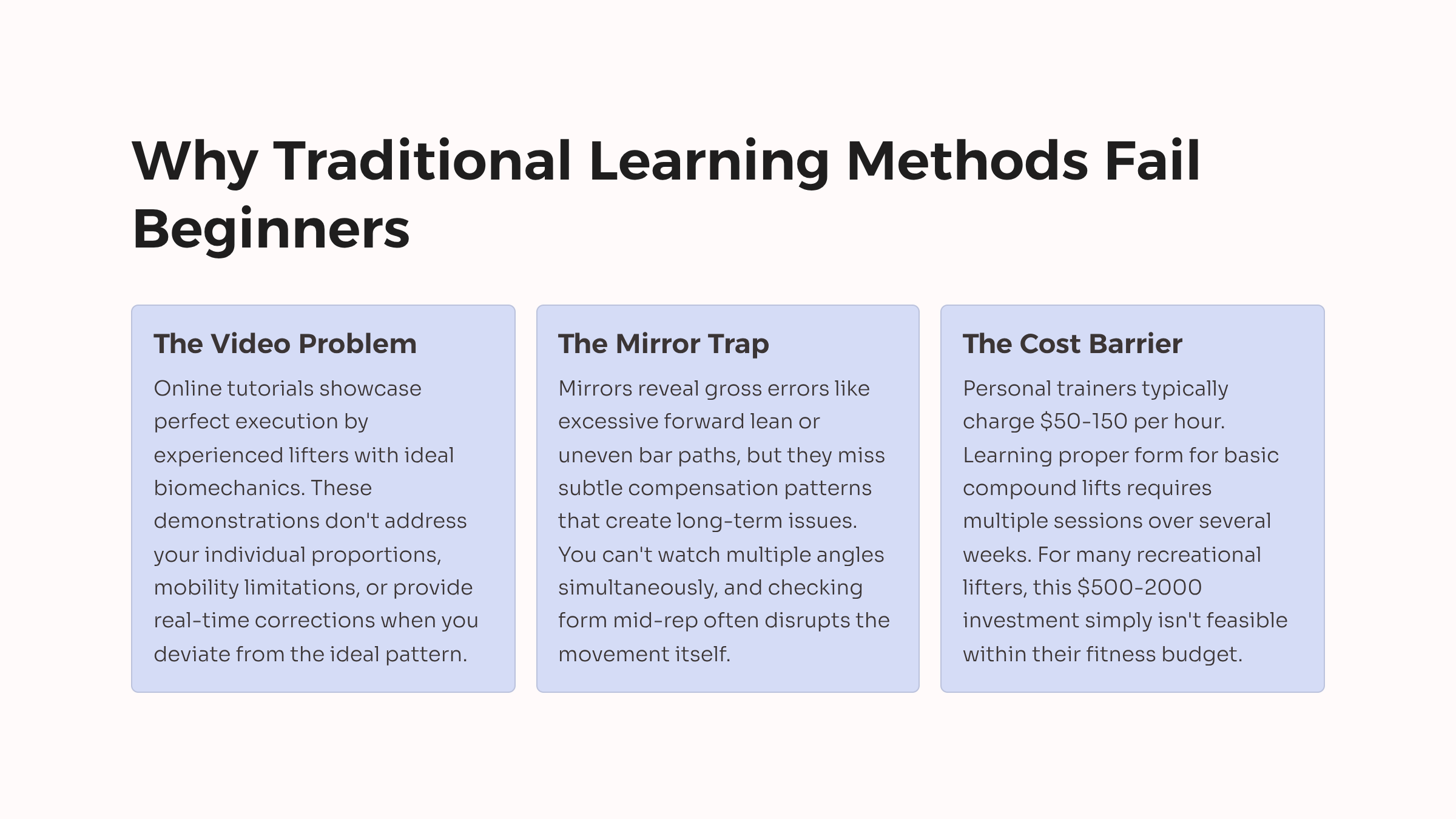
Learning proper form for compound movements like squats, deadlifts, and bench presses feels impossible without professional guidance. You watch YouTube tutorials, check yourself in the mirror, and still leave every gym session wondering if you’re actually performing exercises correctly or setting yourself up for injury. Personal trainers charge $50-150 per hour, and mastering basic lifts requires multiple sessions over several weeks, creating a $500-2000 financial barrier that most recreational lifters simply cannot afford.
This comprehensive guide delivers five revolutionary methods that systematically teach you proper form without the ongoing cost of professional coaching. You’ll discover how to leverage smartphone technology for objective visual feedback, develop kinesthetic awareness that catches errors in real-time, tap into expert online communities for professional-level guidance, perform structured movement assessments that identify physical limitations, and utilize accessible digital tools that quantify your progress.
The frustration of technique uncertainty ends when you implement these proven self-assessment strategies that build genuine competence and lasting confidence in your lifting execution.
Table of Contents
-
Why Traditional Form Learning Methods Fail Beginners
-
Method 1: Strategic Video Analysis With Frame-by-Frame Comparison
-
Method 2: Using Proprioceptive Feedback and Internal Cues
-
Method 3: Leveraging Free Online Form Check Communities
-
Method 4: Structured Movement Screening and Self-Assessment
-
Method 5: Technology-Assisted Form Analysis Tools
-
Integrating All Five Methods Into Your Training Schedule
-
Creating Your Personal Form Improvement Protocol
-
Common Mistakes and How to Avoid Them
-
Your 30-Day Form Mastery Action Plan
Complete Ingredient Profile: The Five Self-Coaching Methods Explained
This proper form mastery system contains five distinct methodologies that work synergistically to replace expensive personal training with sophisticated self-assessment capabilities. Each method addresses specific limitations in traditional learning approaches while building complementary skills that accelerate technical proficiency.
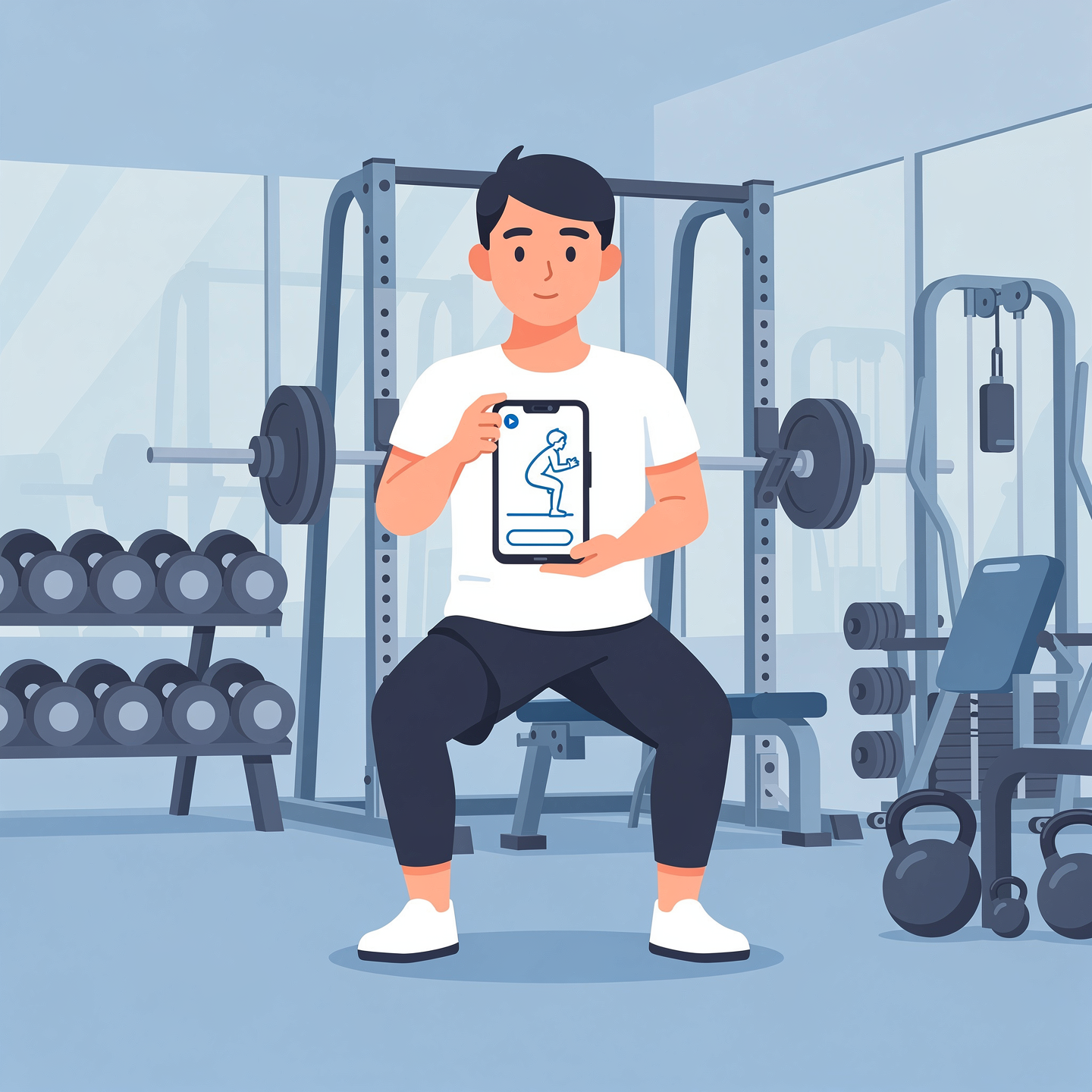
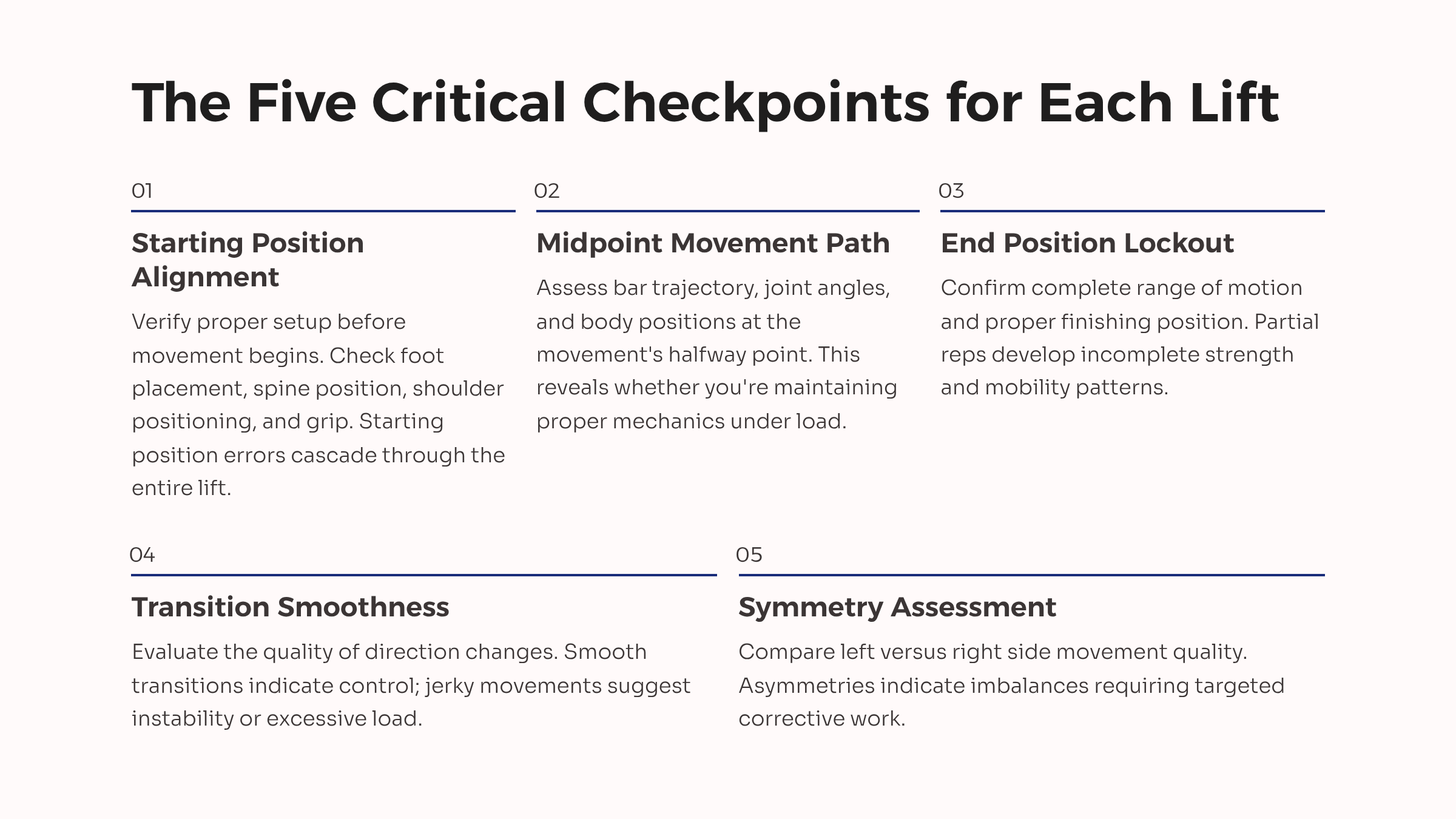
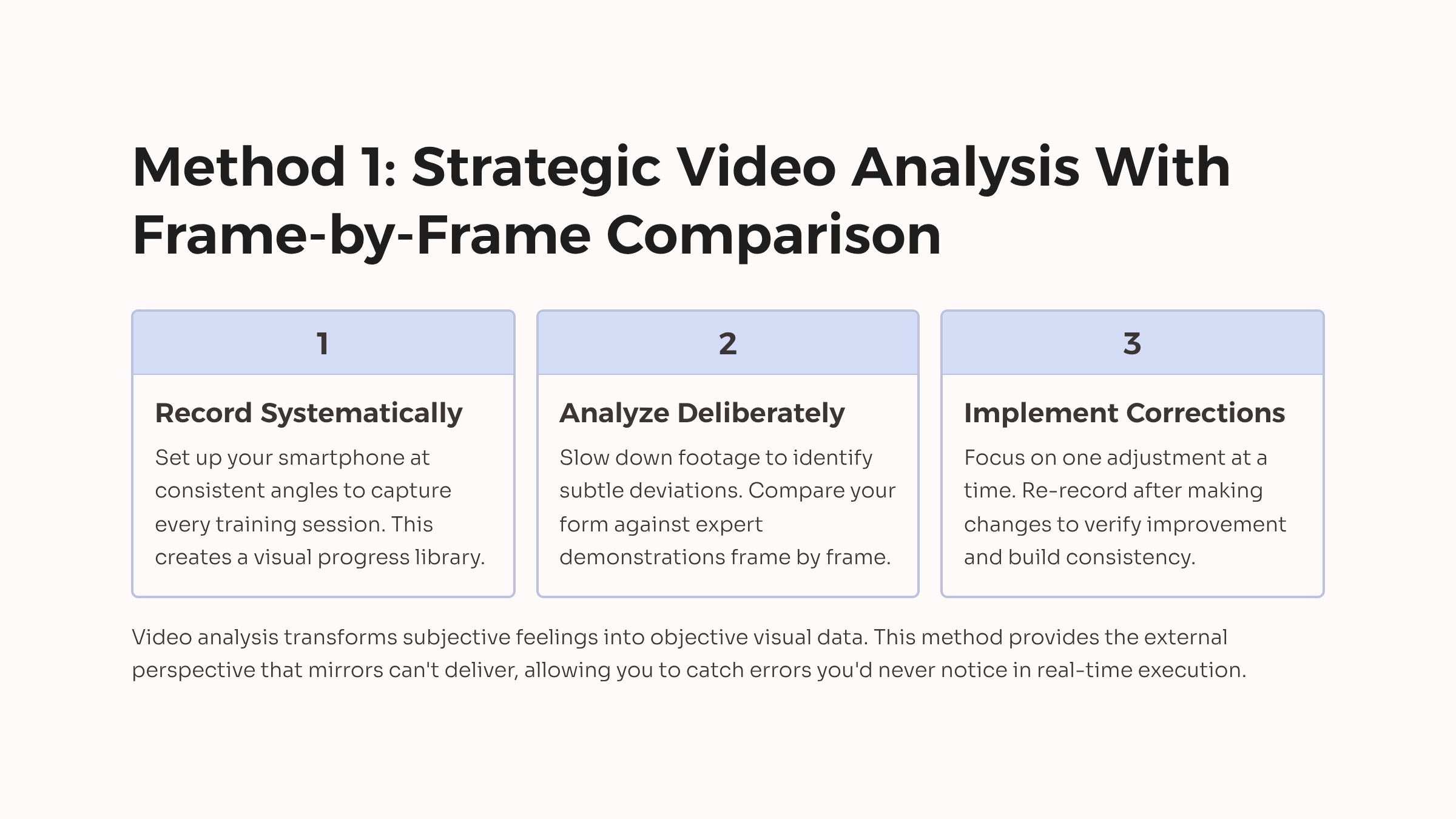
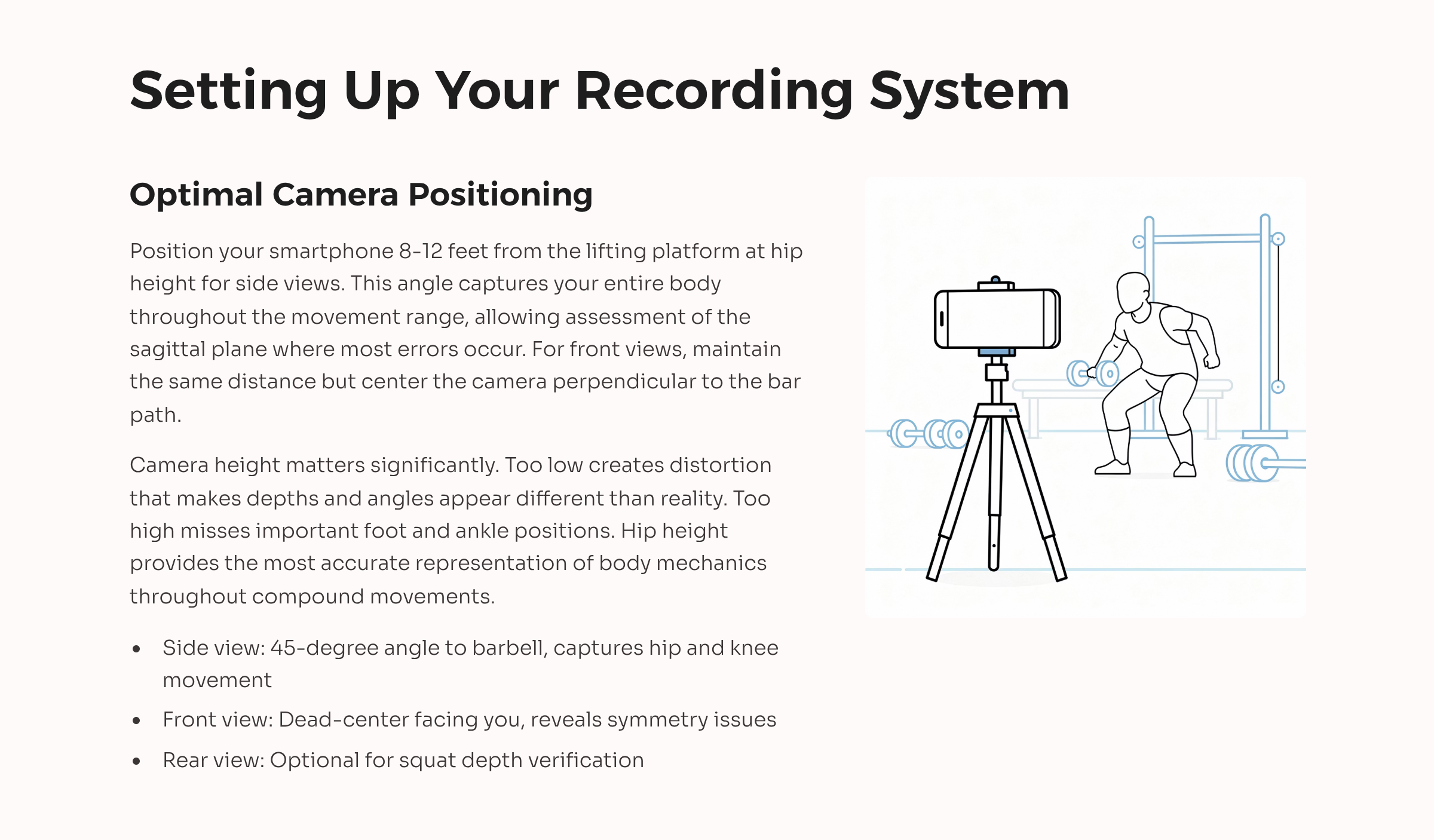
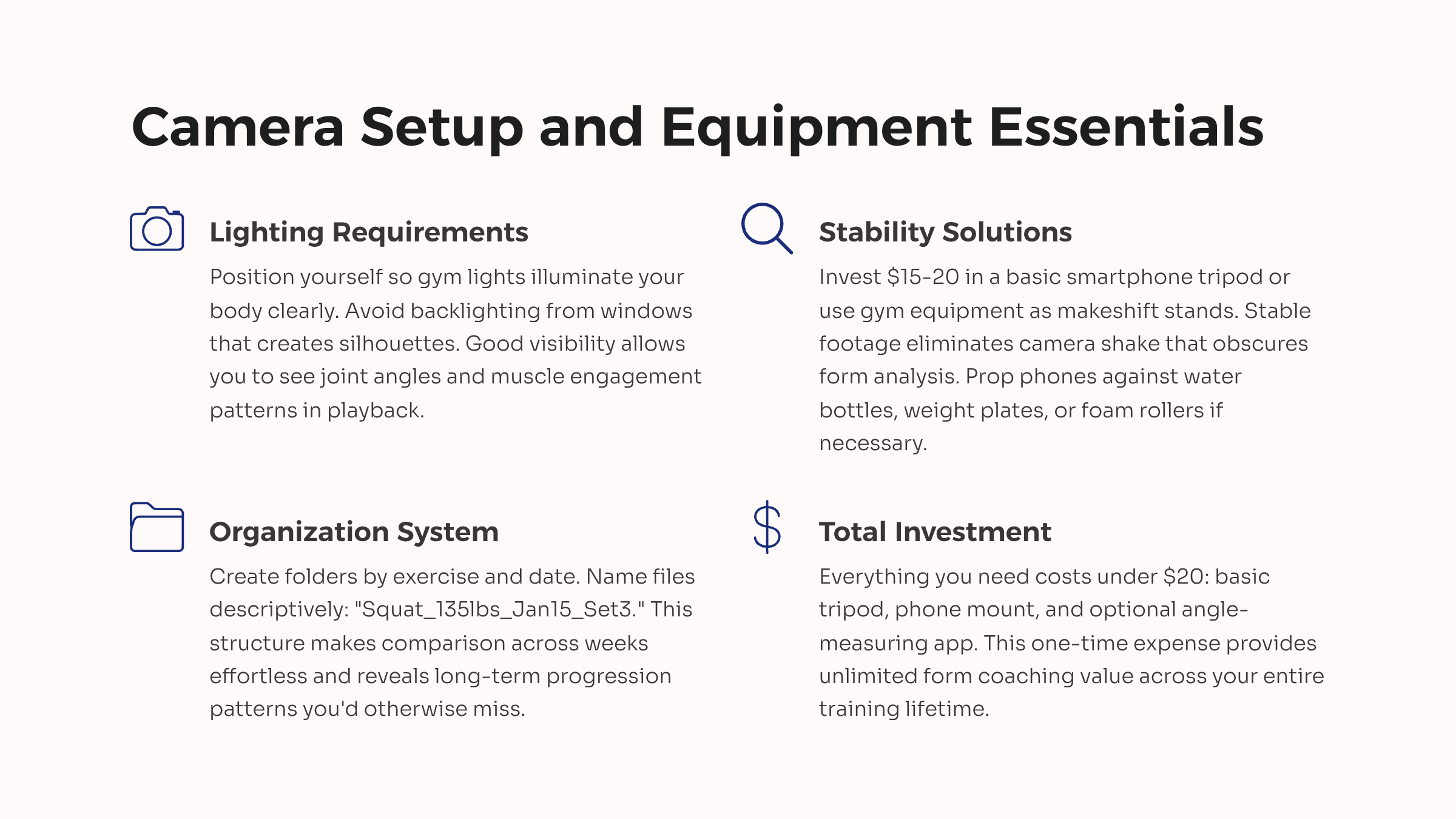
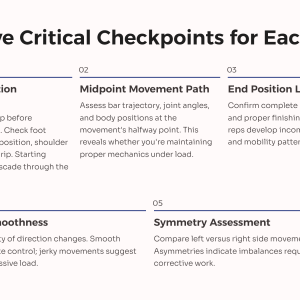
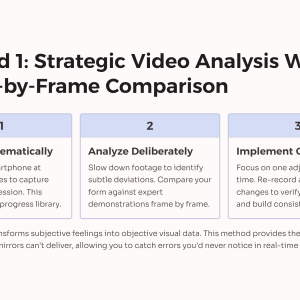
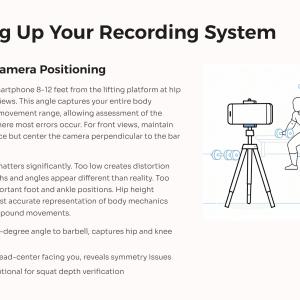
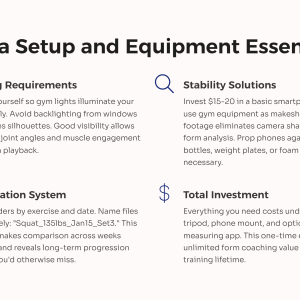
Method 1: Strategic Video Analysis With Frame-by-Frame Comparison transforms subjective feelings into objective visual data by teaching you systematic recording protocols, optimal camera positioning at 8-12 feet from the lifting platform at hip height, and deliberate analysis techniques using 0.25x playback speed. You’ll establish five critical checkpoints for each lift including starting position alignment, midpoint movement path assessment, end position lockout verification, transition smoothness evaluation, and symmetry comparison between left and right sides. The recording system requires minimal investment under $20 for a basic tripod and phone mount, providing unlimited coaching value across your entire training lifetime.
Method 2: Using Proprioceptive Feedback and Internal Cues develops your body’s internal position sense so you can monitor form quality during actual execution without external feedback. This method includes barefoot movement practice to enhance foot and ankle feedback, eyes-closed balance exercises that force reliance on proprioception rather than visual input, single-leg stability progressions that magnify awareness of compensation patterns, and slow-motion rehearsal at 50% normal speed that allows conscious attention to every movement phase. You’ll learn exercise-specific internal cues like feeling squat pressure distributed across your entire foot, recognizing the loaded hamstring tension that signals proper deadlift setup, maintaining the shoulder blade retraction sensation throughout bench pressing, and controlling rib cage position during overhead movements.
Method 3: Leveraging Free Online Form Check Communities connects you with thousands of experienced lifters and coaches who freely offer detailed feedback through platforms like Reddit fitness subreddits, Facebook training groups, Discord coaching servers, and YouTube engagement channels. The system teaches you how to create effective form check submissions with proper video angles, relevant training context, specific concerns clearly articulated, and targeted questions that generate actionable responses rather than generic advice. You’ll master the art of filtering conflicting feedback by identifying credible responders through comment history analysis, looking for consensus across multiple experienced voices, prioritizing safety-based corrections, and implementing one change at a time while documenting results.
Method 4: Structured Movement Screening and Self-Assessment identifies physical limitations preventing proper form execution through simplified versions of professional assessment protocols. The functional movement screen includes overhead deep squats that test combined ankle, hip, thoracic, and shoulder mobility plus coordination, hurdle steps that reveal hip and ankle mobility with left-right symmetry, in-line lunges assessing stability and balance control, and shoulder mobility clearances measuring scapular function. Additional evaluations cover ankle dorsiflexion using the wall test where your knee should touch a wall with toes positioned 5 inches away, hip flexion and extension range testing, thoracic rotation assessment requiring 45+ degrees of movement, and unilateral strength imbalance detection through single-leg squat comparisons.
Method 5: Technology-Assisted Form Analysis Tools leverages artificial intelligence and motion tracking through smartphone apps, wearable sensors, and virtual coaching platforms that deliver professional analysis at a fraction of traditional costs. AI-powered applications like FormCheck AI and Sency use computer vision to track body positions, overlay skeletal models on video footage, measure joint angles automatically, and flag deviations from optimal patterns. Affordable motion sensors under $150 attach to your arm or barbell to track movement velocity, power output, and consistency metrics that identify when fatigue degrades technique. Hybrid virtual training services provide asynchronous video review where coaches analyze your footage with 24-48 hour turnaround at monthly costs of $30-100, making professional guidance accessible for regular use.
How Key Ingredients Work: The Science Behind Self-Coaching Success
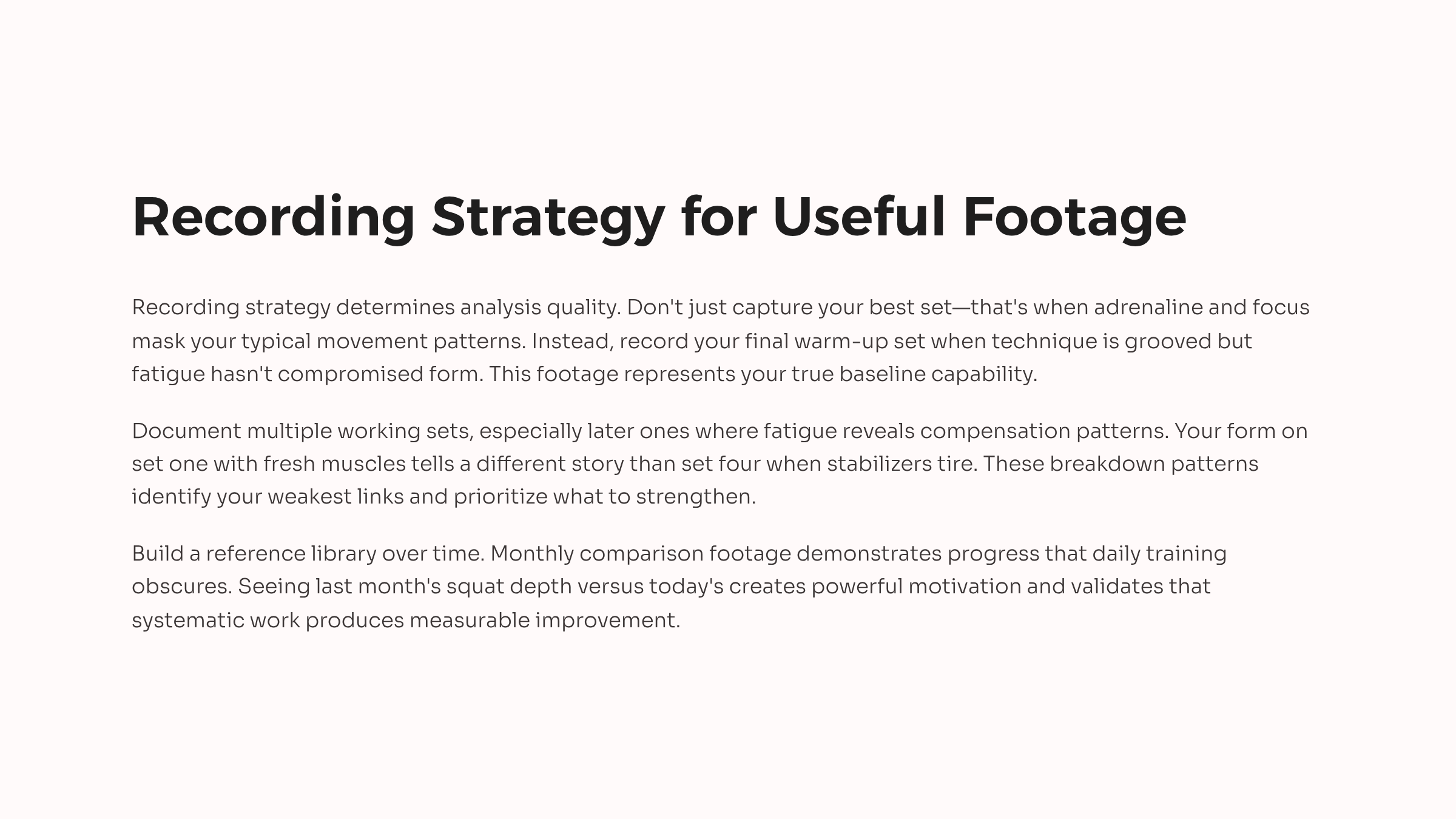
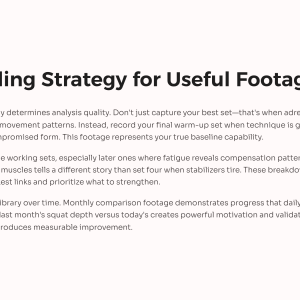
The proper form mastery system works by creating multiple feedback loops that replace the single external perspective a personal trainer provides. Video analysis delivers objective visual data that reveals errors invisible during real-time execution, particularly subtle compensation patterns that mirrors miss because you cannot watch multiple angles simultaneously. Recording your final warm-up set when technique is grooved but fatigue hasn’t compromised form provides the most honest assessment of your true baseline capability.
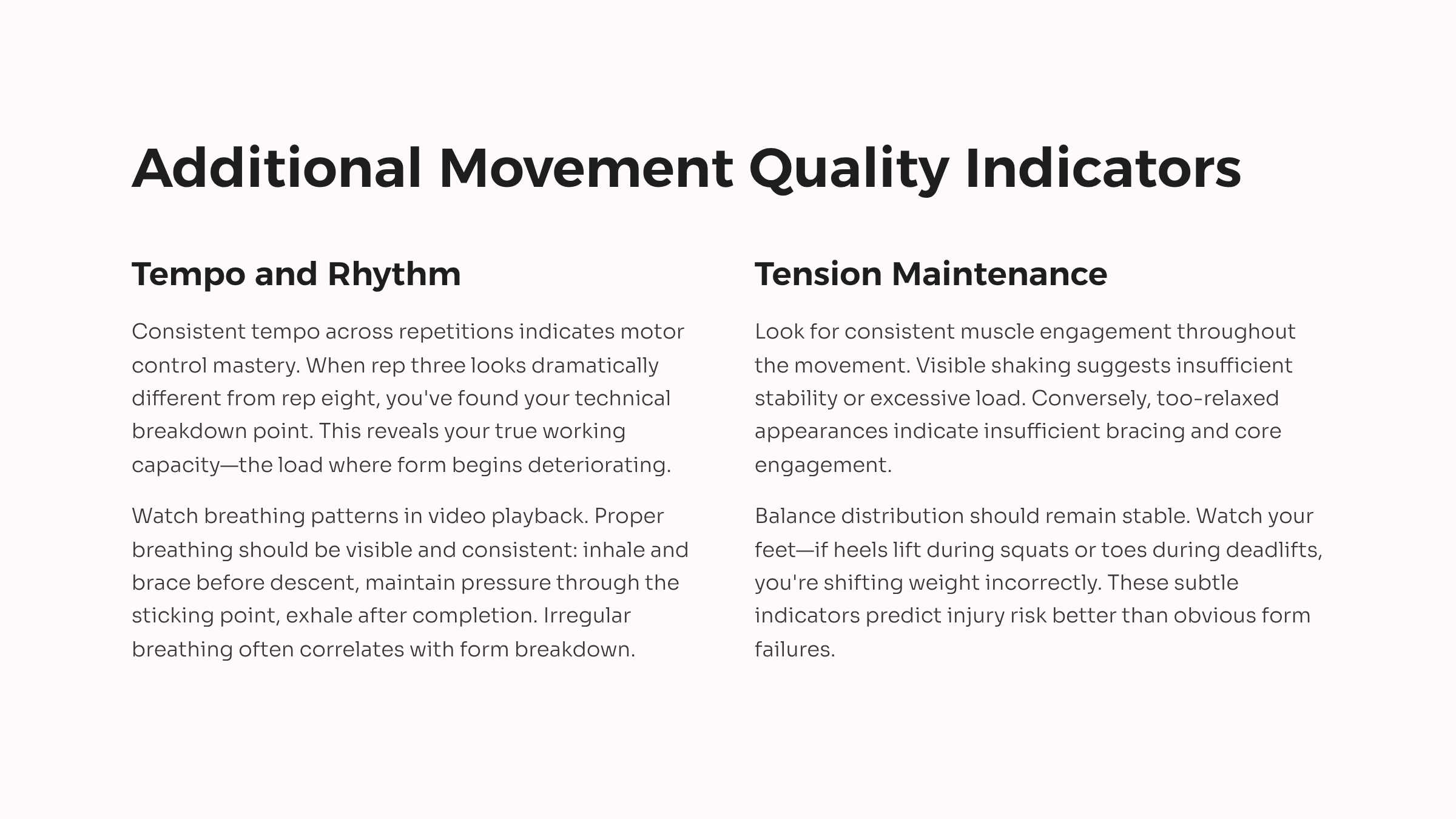
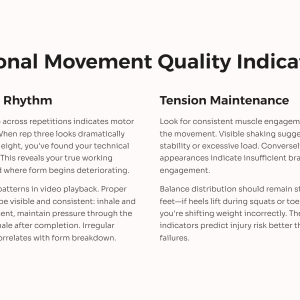
Frame-by-frame comparison at 0.25x playback speed exposes micro-movements that predict injury risk better than obvious form failures, including slight knee cave at squat depth, shoulder elevation during pressing, or spinal rounding under heavy deadlifts. Using phone markup tools to draw lines along your spine, through your knee and hip joints, and down your forearms allows precise angle measurement that can be compared directly against expert demonstrations. A 10-degree difference in hip angle might seem trivial but explains why your squat feels unstable or why your knees ache after training.
Proprioceptive development works by calibrating your internal sensation against objective reality through systematic practice. Performing movements with eyes closed at slow speeds while using external feedback for verification trains your nervous system to detect subtle deviations automatically. The three-point feel test protocol implemented before initiating movement, at the challenging midpoint, and immediately after completing the rep creates an internal monitoring system that catches errors before they cascade through the entire lift.
Online community feedback functions because experienced lifters have analyzed thousands of videos and recognize patterns instantly that would take years of independent study to identify. A knowledgeable community member spots your hip shift, early knee extension, or shoulder instability within seconds and provides specific corrections backed by their accumulated observation experience. Posting during peak community activity times and engaging with others’ form checks before submitting your own maximizes response quality through social reciprocity.
Movement screening reveals whether form issues stem from poor motor patterns fixable with practice versus physical restrictions requiring targeted mobility work. Attempting to force positions your body lacks the capacity to control safely creates compensatory patterns that feel normal after adaptation but accumulate injury risk over time. Identifying that your ankle dorsiflexion measures only 25 degrees when 30+ degrees is required for parallel squats explains why you compensate with excessive forward lean or heel lift.
Technology amplifies self-assessment by quantifying progress and providing real-time metrics that calibrate your subjective feelings. Tracking that your deadlift velocity drops from 0.5 m/s to 0.3 m/s by set four reveals your technical breakdown point more precisely than vague feelings of fatigue. AI movement tracking excels at identifying gross deviations from optimal positions while human judgment remains superior for subtle nuances, making technology most effective as complement rather than replacement for developed assessment skills.
Specific Dosage and Usage Instructions
Week 1 Implementation Protocol: Record all main lifts from side angle at hip height positioned 8-12 feet from the platform, capturing 3-5 working reps rather than just your best single to reveal actual movement patterns. Perform the simplified functional movement screen including overhead deep squat, hurdle step, in-line lunge, shoulder mobility test, and ankle dorsiflexion wall test, scoring each on the 0-3 scale and documenting specific limitations. Join one quality form check community such as relevant Reddit fitness subreddits or Facebook training groups, post an introduction, and review community rules before submitting content. Practice proprioceptive drills for 10 minutes daily including barefoot bodyweight movements, eyes-closed balance work on each leg for 30-60 seconds, and slow-motion rehearsal of main lifts at 50% normal speed.
Weeks 2-4 Systematic Analysis: Analyze one recorded lift per training session using frame-by-frame review at 0.25x playback speed, pausing at the five critical checkpoints of starting position, midpoint, end position, transitions, and symmetry assessment. Compare your footage side-by-side with expert demonstrations by placing phone and tablet together or using split-screen apps, drawing angle lines along spine, hips, and knees to measure deviations. Post your first form check video with comprehensive context including training experience level, specific concerns, which set number you’re viewing, and targeted questions about observable mechanics rather than feelings. Respond constructively to three other community members’ form checks before posting your own to build social capital and reciprocity.
Month 2 Correction Implementation: Choose one technical flaw to address based on video analysis and community consensus, implementing corrections for 2-3 training sessions before assessing improvement and moving to the next issue. Dedicate 10-15 minutes daily to targeted mobility work for identified limitations, retesting problem areas weekly to track improvement in degrees of motion or quality scores. Download and trial two form analysis apps during different weeks, documenting which features provide actionable value for your learning style versus which seem interesting but don’t change behavior. Implement the one perfect rep protocol by performing a single bodyweight repetition with eyes closed and complete focus before each working set to activate proprioceptive awareness.
Months 3-6 Refinement Phase: Create monthly comparison videos showing your form from identical angles at similar loads to reveal long-term progression patterns that daily training obscures. Expand your proprioceptive vocabulary by testing different internal cues including metaphorical language like spread the floor for external rotation, sensation-based cues like feel tension in hamstrings, and directional commands like push knees out. Consider quarterly virtual coaching sessions at $50-100 for comprehensive professional review that catches issues your self-assessment misses. Perform weekly abbreviated movement screens focusing on 3-4 historically problematic tests to catch regression before minor issues become training-disrupting problems.
Daily Integration Protocol: Begin each training session with 10 minutes of proprioceptive warm-up including barefoot movement practice, eyes-closed balance assessment, and slow-motion rehearsal of planned exercises. Record at minimum your final warm-up set and one mid-session working set from side angle, reviewing footage between exercises using 0.25x playback to catch errors while they’re fresh. Implement the three-point feel test before lifting, at the movement’s challenging point, and after completing each rep to build real-time internal monitoring. Document observations in a training journal correlating how movements felt with what video revealed, calibrating your internal sensing against objective reality over 4-6 weeks until patterns emerge.
Key Features and Benefits
This proper form guide eliminates the financial barrier preventing most recreational lifters from accessing quality technical coaching. The five-method system provides the comprehensive feedback loop necessary for rapid skill acquisition without ongoing professional supervision costs.
Complete Video Analysis System: Master optimal camera positioning protocols, systematic recording strategies that capture form breakdown patterns under fatigue, frame-by-frame comparison techniques using free smartphone tools, and angle measurement methods that quantify deviations from ideal positions. Total equipment investment remains under $20 for basic tripod and phone mount while delivering unlimited coaching value across your entire training lifetime.
Proprioceptive Development Program: Build acute body awareness through barefoot practice that enhances foot and ankle feedback, eyes-closed balance exercises forcing internal sensing reliance, single-leg stability progressions revealing compensation patterns, and exercise-specific internal cue systems for every major compound movement. Learn to distinguish between proper and improper positioning before weight moves, preventing errors rather than correcting them mid-rep.
Expert Community Access: Connect with thousands of experienced lifters and coaches providing free detailed feedback through curated Reddit subreddits, Facebook training groups, Discord servers, and YouTube engagement. Receive professional-level guidance through properly structured form check submissions that generate actionable responses and build ongoing mentorship relationships with knowledgeable community members.
Professional Movement Assessment: Perform simplified functional movement screens identifying mobility deficits, stability weaknesses, and left-right asymmetries that sabotage technique. Joint-by-joint evaluation reveals whether form issues stem from poor motor patterns fixable with practice versus physical restrictions requiring targeted corrective work. Monthly reassessment documents improvement and catches developing problems before they become training-disrupting injuries.
Technology Integration Guide: Leverage AI-powered apps using computer vision to track body positions and measure joint angles automatically, affordable motion sensors under $150 quantifying movement velocity and consistency, and hybrid virtual coaching platforms delivering professional video review at $30-100 monthly versus $2000+ for traditional in-person training. Strategic free trial testing identifies which technology features provide genuine value for your specific learning style.
Comprehensive Integration Framework: Weekly form improvement schedules rotating focus through all five methods, personal form checklist templates documenting exercise-specific critical cues and weak points requiring monitoring, progress tracking systems organizing video libraries and measurement data for long-term comparison, and troubleshooting protocols addressing common obstacles like conflicting advice and analysis paralysis.
Addressing Your Biggest Pain Points
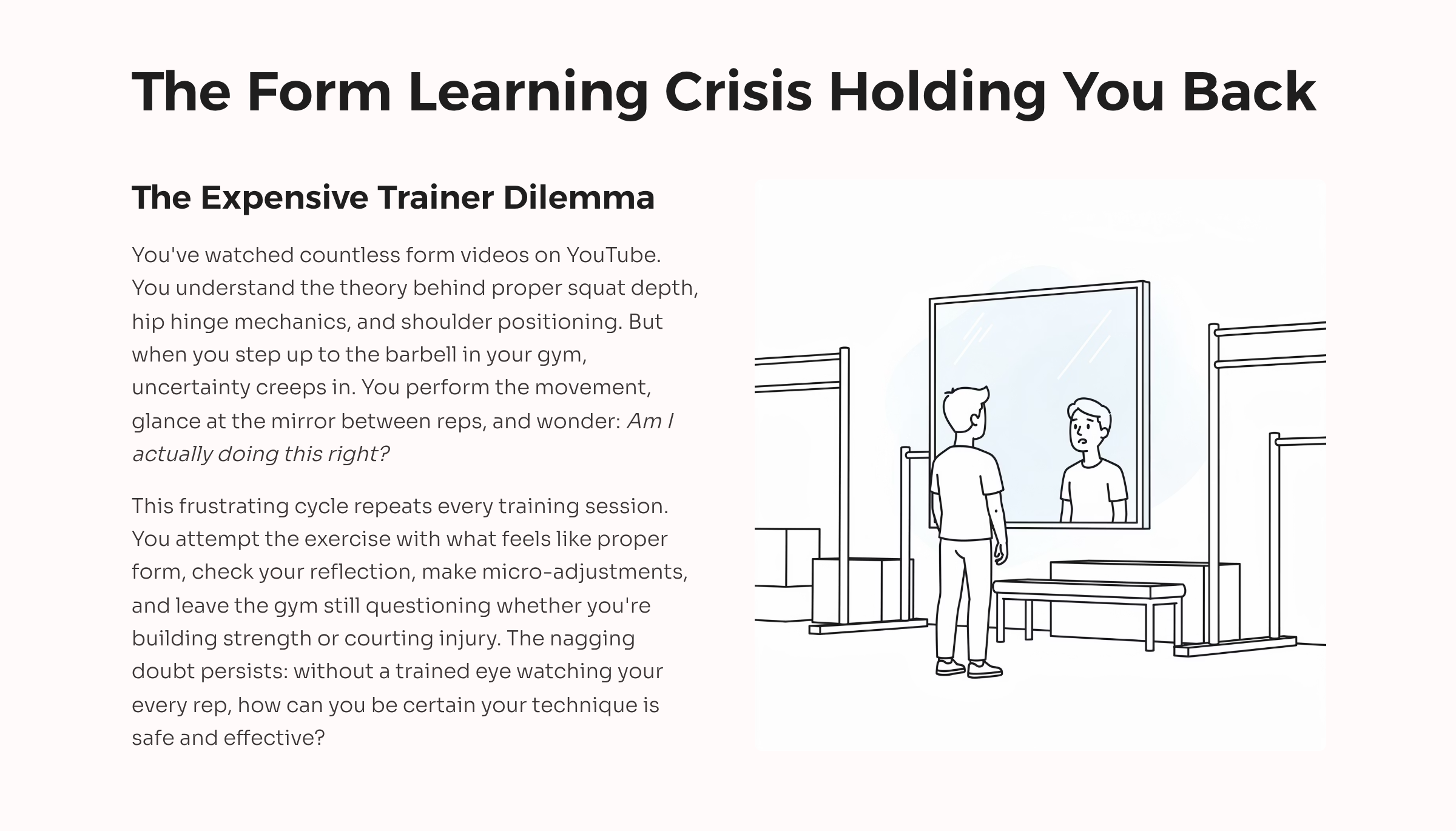
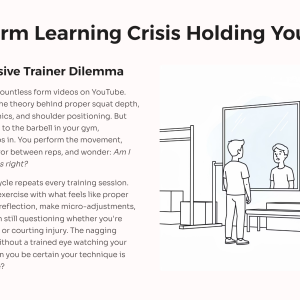
The nagging uncertainty about whether you’re performing exercises correctly creates anxiety that undermines every training session. You attempt movements with what feels like proper form, check your reflection between reps, and leave the gym questioning if you’re building strength or courting injury. This guide eliminates that doubt by providing objective assessment tools that replace subjective confusion with concrete visual evidence and measurable standards.
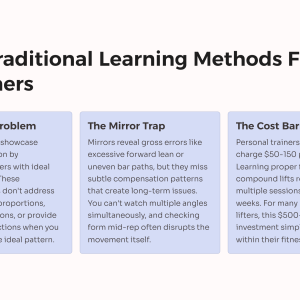
The frustration of watching perfect form demonstrations by experienced lifters with ideal biomechanics intensifies when those tutorials don’t address your individual proportions, mobility limitations, or provide real-time corrections when you deviate from the ideal pattern. Movement screening identifies your specific physical constraints so you understand whether technique issues require motor pattern practice or mobility development. Discovering that your ankle dorsiflexion measures only 25 degrees when 30+ is needed for parallel squats transforms vague form problems into specific correctable limitations with clear improvement protocols.
The mirror trap catches gross errors like excessive forward lean or uneven bar paths but misses subtle compensation patterns creating long-term problems. You cannot watch multiple angles simultaneously, and checking form mid-rep disrupts the movement itself. Strategic video analysis from optimal camera positions captures your entire body throughout full range of motion, allowing frame-by-frame review that reveals micro-movements invisible during real-time execution.
The prohibitive cost barrier of personal training at $50-150 per hour creates a $500-2000 investment that simply isn’t feasible within most recreational fitness budgets. Online community access connects you with expert coaches providing detailed feedback at zero cost, while technology tools delivering professional-level analysis require minimal investment under $200 for your entire first year. Virtual coaching options provide monthly professional video review at $30-100, making ongoing guidance accessible without the financial burden of continuous in-person sessions.
The fear of developing muscle imbalances from improper technique compounds when you lack ability to detect asymmetries during training. Unilateral testing protocols reveal hidden weaknesses where your stronger side compensates during bilateral movements, while movement screening quantifies left-right differences exceeding 10% that require corrective attention. Weekly abbreviated assessments catch developing imbalances before they become training-disrupting problems.
Why Generic Solutions Fail You
Standard online tutorials showcase perfect execution without acknowledging that individual biomechanics, limb proportions, and mobility limitations fundamentally alter optimal positioning for each lifter. Generic advice cannot account for your specific ankle mobility restricting squat depth, thoracic extension limiting overhead pressing, or hip structure determining ideal stance width. This proper form system teaches self-assessment skills that identify your unique constraints and adapt technique recommendations to your body rather than forcing your body into standardized positions it cannot safely access.
Mirrors provide limited single-angle feedback during movement execution when comprehensive form evaluation requires static analysis from multiple perspectives. The visual distraction of watching yourself mid-rep often degrades technique quality and prevents development of kinesthetic awareness that allows automatic proper execution. Video recording from systematic camera positions captures objective footage reviewable at 0.25x speed with angle measurement tools that quantify deviations mirrors cannot reveal.
Many personal trainers focus on sales over education, creating dependency rather than building your self-coaching capabilities. A skilled trainer teaches assessment skills that make ongoing sessions unnecessary, while sales-focused trainers keep clients perpetually reliant on external feedback. This guide prioritizes self-sufficiency, using technology and community resources as temporary training wheels while developing judgment and awareness that eventually make external assistance optional.
Single-method approaches fail because comprehensive skill acquisition requires multiple feedback types working synergistically. Video analysis alone develops visual assessment without kinesthetic awareness, proprioceptive training without external verification risks calibration errors, community feedback without personal analysis skills prevents learning progression, and technology without interpretation capability provides overwhelming data without actionable insights. The integrated five-method system ensures each approach compensates for limitations in the others.
Transform Your Training With Self-Coaching Mastery
Imagine walking into your gym three months from now with absolute certainty about your technique quality. You set up for your working set, perform the one perfect bodyweight rep with eyes closed that activates your proprioceptive awareness, then execute your lifts with confidence born from objective evidence rather than hopeful guessing. Your phone captures footage from the practiced camera angle, and during rest periods you review at quarter speed, immediately identifying that rep four showed slight knee cave requiring concentration correction for remaining sets.
That transformation happens when you implement a systematic self-assessment protocol replacing expensive ongoing coaching with sophisticated personal evaluation capabilities. You develop genuine confidence in movement execution, build ability to self-correct technical flaws before they become ingrained patterns, and achieve sustainable progress without financial burden of continuous professional supervision. You become your own best coach, the ultimate goal of any training program.
Your training partner will notice the difference too. The elimination of form anxiety that previously created hesitation before heavy sets. The rapid technical improvement visible in monthly comparison videos. The reduced injury risk from catching compensation patterns early through weekly movement screening. The cost savings allowing investment in quality equipment rather than endless coaching fees. These benefits extend beyond individual training sessions into long-term athletic development and injury prevention.
Take Action Now and Master Proper Form Independently
Every training session with questionable technique reinforces improper motor patterns that become progressively harder to correct. The longer you delay implementing systematic self-assessment, the more ingrained your compensations become. The best time to establish proper form foundations was during your first gym session. The second best time is today with proven self-coaching methods that eliminate uncertainty without expensive professional dependency.
This comprehensive guide provides everything necessary to transform from confused beginner questioning every rep into confident self-coach who identifies errors, implements corrections, and verifies improvements through objective measurement. You eliminate the barrier preventing most recreational lifters from accessing quality technical instruction. You build skills that compound over your entire training lifetime rather than renting knowledge from professionals.
Stop wasting gym sessions wondering if you’re training effectively or accumulating injury risk. Stop letting prohibitive coaching costs prevent you from learning proper form. Stop relying on mirrors and feelings when objective assessment tools cost under $20 and expert communities provide free guidance. Master proper form using professional-level self-assessment methods and unlock the strength, confidence, and progress you deserve.




Reviews
There are no reviews yet.