

Your alarm screams at 6 AM Monday but you hit snooze until 8 AM on Saturday—sound familiar? This erratic pattern confuses your biological clock, leaving you perpetually exhausted.
Research from the UK Biobank reveals that maintaining a consistent wake time reduces mortality risk by 20-48% while boosting energy, cognitive function, and overall health.
Your body craves predictability, and when you establish a reliable wake-up schedule, even on weekends, you synchronize your circadian rhythm for transformative sleep improvements.
This comprehensive guide unveils seven evidence-based strategies to anchor your mornings and reclaim restorative rest.
Understanding Your Circadian Architecture
The Biological Clock Mechanism
Your suprachiasmatic nucleus (SCN) operates as your brain’s master timekeeper, orchestrating hormonal cascades throughout each 24-hour cycle. This neurological command center synchronizes cortisol surges for morning alertness and melatonin secretion for nighttime drowsiness.
When wake times fluctuate wildly between weekdays and weekends, you essentially give your SCN contradictory instructions, creating internal chaos.
The greater your sleep-wake consistency, the more effectively your body harmonizes various physiological processes. Memory consolidation, cellular repair, and metabolic regulation all depend on predictable rhythms.
Disrupting these patterns triggers a cascade of adverse health outcomes including cardiovascular dysfunction, impaired glucose metabolism, and heightened inflammation markers.
Social Jetlag Phenomenon
Social jetlag describes the misalignment between your biological clock and social obligations, particularly the dramatic shift between weekday and weekend schedules.
Adults experiencing over two hours of social jetlag face double the likelihood of depressive symptoms and significantly reduced wellbeing. This isn’t mere fatigue—it’s systemic dysregulation affecting multiple organ systems.
The typical pattern involves sleeping 2-3 additional hours on free days to recover from weekday sleep debt. However, this “recovery” actually perpetuates the problem by shifting your internal timing system backward. Your Monday morning then feels like waking at 4 AM would feel to someone on a stable schedule—brutal and unnatural.

Sleep-Wake Homeostasis
Sleep pressure accumulates during wakefulness through adenosine buildup in your neural tissues. This homeostatic drive increases progressively until you finally surrender to slumber. A consistent wake time establishes predictable adenosine accumulation patterns, making sleep onset more reliable at your designated bedtime.
When you sleep until 10 AM on weekends after waking at 6 AM on weekdays, you reset this delicate balance. Your sleep drive fails to build adequately by your usual weeknight bedtime, creating Sunday night insomnia. This vicious cycle perpetuates throughout the week, compromising both sleep quality and daytime functioning.
The Seven Pillars of Wake Time Mastery
1. Anchor Your Morning Hour
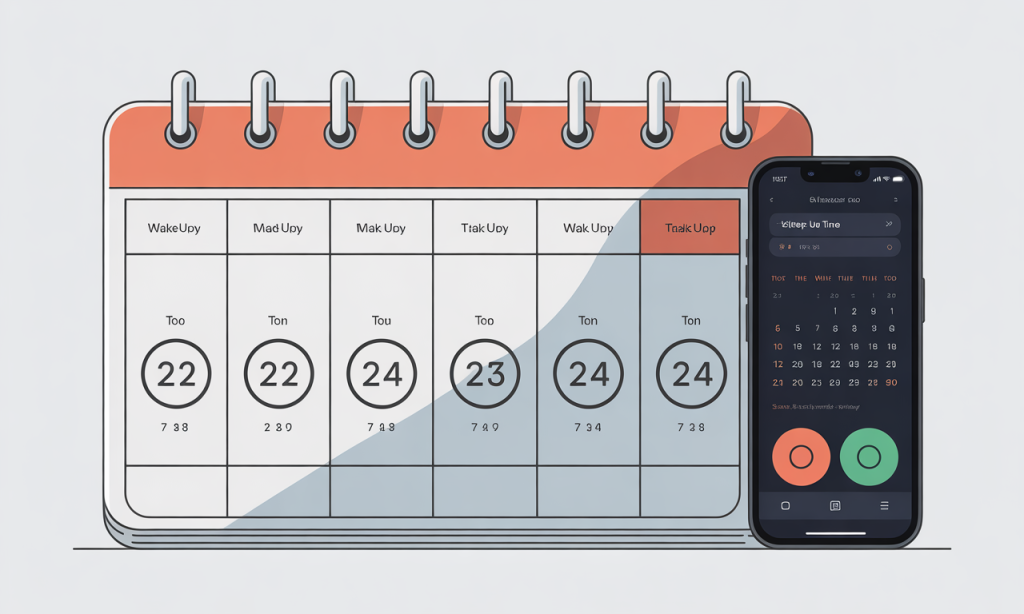
Select one specific wake time and commit to it relentlessly—every single day, including weekends and holidays. This non-negotiable anchor point becomes the foundation upon which all other sleep improvements rest. Research demonstrates that even 30-minute variations can disrupt circadian synchronization and diminish the protective health effects.
Your chosen time should allow for adequate sleep duration based on your individual needs, typically 7-9 hours for most adults. Calculate backward from your necessary morning obligations to determine an optimal window. If you must be ready for work by 8 AM, a 6 AM wake time provides sufficient preparation without rushing.
Initially, this consistency will feel challenging, particularly on weekends when social pressures tempt you toward sleeping in. However, within one to two weeks, your body adapts remarkably, making the process increasingly natural. The circadian entrainment that develops produces profound benefits extending far beyond sleep quality.
Morning Anchor Implementation:
- Choose your target wake time based on work/life obligations
- Set a reliable alarm (consider a sunrise simulator lamp)
- Place your alarm device across the room to prevent snooze temptation
- Commit to seven consecutive days before evaluating effectiveness
- Track your morning energy levels in a simple journal
2. Harness Phototherapy Strategically
Bright light exposure immediately upon waking serves as the most powerful circadian synchronizer available. Morning light suppresses residual melatonin, triggers cortisol release, and signals your SCN that daytime has commenced. Even a single 30-minute bright light exposure can produce 75% of the phase-advancing effect achieved with two hours of exposure.
Natural sunlight provides optimal intensity at 10,000 lux, but artificial light therapy boxes offer convenient alternatives during winter months or for early risers. Position yourself within three feet of a 10,000-lux device for 20-30 minutes while eating breakfast or reviewing emails. This intervention alone can advance your circadian phase by approximately one hour daily.
Timing proves critical—light exposure occurring within one hour of your wake time produces maximal phase-advancing effects. Conversely, bright light exposure two hours before your usual bedtime shifts your rhythm later, counteracting your efforts. Strategic phototherapy essentially reprograms your biological clock through non-invasive, drug-free mechanisms.
Light Exposure Protocol:
- Get bright light within 15 minutes of waking
- Spend 20-30 minutes outdoors or near windows
- Use 10,000-lux light therapy lamp if natural light unavailable
- Avoid bright light exposure 2+ hours before bedtime
- Dim evening lights progressively starting 90 minutes pre-sleep
3. Implement Sleep Restriction Methodology
Sleep restriction therapy initially sounds counterintuitive—limiting time in bed to improve sleep quality—but delivers remarkable results for individuals with irregular patterns. This evidence-based technique increases homeostatic sleep pressure, consolidates fragmented sleep, and retrains your body to associate bed with rapid sleep onset. The approach was developed by sleep scientist Arthur Spielman and forms a core component of cognitive behavioral therapy for insomnia (CBT-I).
Begin by calculating your average total sleep time over seven nights using a sleep diary. Initially restrict your time in bed to match this duration, maintaining your fixed wake time. For example, if you average 6.5 hours of actual sleep and wake at 6 AM, you wouldn’t go to bed before 11:30 PM regardless of subjective sleepiness.
As your sleep efficiency improves to 85% or higher (time asleep divided by time in bed), gradually extend your sleep window by 15-20 minute increments every five days. This methodical expansion continues until you reach your optimal sleep duration. The temporary daytime sleepiness is worthwhile—studies show sleep restriction combined with consistent wake times produces rapid and reliable improvement in sleep onset, consolidation, and quality.
Sleep Restriction Guidelines:
- Track actual sleep time for one week using sleep diary
- Match time in bed to average sleep duration (minimum 5.5 hours)
- Maintain consistent wake time regardless of when you fall asleep
- Increase sleep window by 15-20 minutes when efficiency exceeds 85%
- Avoid daytime napping during initial restriction phase
4. Practice Stimulus Control Discipline
Your bedroom should trigger sleepiness through consistent environmental associations, not wakefulness through conflicting cues. Stimulus control therapy retrains your brain to link your bed exclusively with sleep and intimacy, eliminating competing associations with work, entertainment, or worry. This behavioral modification technique addresses the perpetuating factors that maintain chronic sleep disruption.
If unable to fall asleep within 20 minutes, leave your bedroom and engage in a tedious activity under dim lighting until genuine sleepiness emerges. Reading dense material, folding laundry, or organizing papers all qualify—avoid stimulating activities like social media, action movies, or intense conversations. Return to bed only when sleep feels imminent.
This disciplined approach prevents your brain from learning that bed equals prolonged wakefulness. Combined with your consistent wake time, stimulus control creates powerful conditioning that makes sleep onset increasingly automatic. The inconvenience of leaving your comfortable bed at 2 AM initially feels annoying, but the long-term payoff in sleep quality justifies the temporary discomfort.
Stimulus Control Rules:
- Use bed exclusively for sleep and intimacy
- Leave bedroom if awake beyond 20 minutes
- Return only when genuinely sleepy
- Repeat as many times as necessary throughout the night
- Never watch television, work, or scroll devices in bed
5. Optimize Strategic Napping Windows
Napping represents a double-edged sword—brief afternoon rest periods can enhance cognitive performance and reduce stress, while poorly timed naps sabotage nighttime sleep. The ideal napping window occurs between 1-4 PM during your circadian afternoon dip, when sleep pressure naturally increases. This timing capitalizes on biological rhythms without interfering with nighttime sleep consolidation.
Limit nap duration to 10-20 minutes for most adults, which provides restorative benefits without descending into deep slow-wave sleep. Setting an alarm prevents accidentally sleeping 90+ minutes, which causes sleep inertia (that groggy, disoriented feeling upon waking) and reduces homeostatic sleep pressure needed for nighttime. Brief naps sustain cognitive benefits for 2-3 hours post-rest.
During your initial sleep schedule reconstruction, consider eliminating naps entirely for two weeks to maximize homeostatic drive at bedtime. Once you’ve established consistent nighttime sleep with your fixed wake time, strategic afternoon naps can be reintroduced cautiously. Monitor whether napping affects your ability to fall asleep at your target bedtime—individual responses vary considerably.
Napping Best Practices:
- Time naps between 1-4 PM only
- Limit duration to 20 minutes maximum
- Set a gentle alarm to prevent oversleeping
- Eliminate naps entirely if struggling with nighttime sleep
- Create comfortable but not-too-comfortable napping environment

6. Engineer Your Wind-Down Ritual
A consistent pre-sleep routine signals your nervous system that sleep approaches, triggering physiological changes that facilitate the wake-to-sleep transition. Begin your wind-down ritual 60-90 minutes before your target bedtime, creating a buffer zone between daily demands and restorative rest. This temporal boundary allows your sympathetic nervous system to downregulate while parasympathetic activity increases.
Your personalized routine should incorporate low-stimulation activities that you genuinely find relaxing—reading physical books, gentle stretching, warm baths, or listening to calming music. The specific activities matter less than their consistency and your positive associations with them. Over repeated nights, these behaviors become powerful cues that prime your brain for sleep.
Critically, enforce an electronics curfew by eliminating screens 60 minutes before bed. Blue light wavelengths suppress melatonin secretion by up to 50%, while engaging content activates alerting neural networks counterproductive to sleep. Create a device charging station outside your bedroom to remove temptation. Your sleep quality will improve dramatically when you protect your final waking hour from digital intrusion.
Wind-Down Ritual Components:
- Dim lights progressively starting 90 minutes pre-sleep
- Take a warm bath or shower to facilitate body temperature drop
- Practice relaxation techniques like progressive muscle relaxation
- Read physical books or magazines (avoid electronic readers with backlit screens)
- Prepare next day’s clothing/meals to reduce morning decision fatigue
- Journal briefly to download worries from working memory
7. Maintain Weekend Consistency Religiously
Weekend wake time consistency represents the most challenging yet crucial element of sleep schedule optimization. Social pressures, accumulated sleep debt, and psychological entitlement to “sleeping in” all conspire against maintaining your weekday schedule. However, weekend deviations of even 90 minutes significantly disrupt circadian alignment and trigger social jetlag symptoms.
If you absolutely must allow flexibility, limit weekend wake time variations to 30-60 minutes maximum from your weekday schedule. Waking at 7 AM on Saturday instead of 6 AM proves far less disruptive than sleeping until 9 or 10 AM. This minor concession maintains reasonable circadian consistency while acknowledging realistic lifestyle demands.
Consider the profound benefits motivating this discipline: adults maintaining consistent seven-day schedules experience lower cardiovascular disease rates, improved metabolic health markers, reduced inflammation, enhanced mental health, and significantly decreased mortality risk. The temporary sacrifice of weekend sleep-ins pales compared to these substantial, research-validated health advantages. Your future self will thank you for prioritizing long-term wellbeing over short-term indulgence.
Weekend Strategy:
- Set weekend alarms for same time as weekdays
- Plan engaging morning activities to motivate timely rising
- Recognize “sleeping in” perpetuates rather than resolves sleep debt
- If needed, limit weekend deviation to 30-60 minutes maximum
- Maintain all other sleep hygiene practices consistently
Troubleshooting Common Implementation Obstacles
Dealing With Sleep Debt
Many adults approach consistent wake time implementation while carrying substantial accumulated sleep debt from months or years of inadequate rest. This biological deficit manifests as overwhelming daytime sleepiness when you first establish regular schedules. Recognize this temporary discomfort as evidence your body finally has permission to acknowledge its genuine needs.
Rather than abandoning your consistent wake time, lean into strategic sleep extension by gradually moving your bedtime earlier in 15-minute increments every 3-4 days. Simultaneously maintain your fixed morning anchor point. This approach allows you to incrementally expand your sleep opportunity window without disrupting circadian consistency.
Sleep banking—intentionally sleeping extra hours before anticipated sleep restriction—has demonstrated superior performance outcomes in shift workers and residents. If you anticipate an upcoming demanding period, accumulate extra sleep in advance rather than attempting recovery afterward. Your consistent wake time remains non-negotiable even during recovery phases.
Managing Travel and Shift Work
Travel across time zones and rotating shift schedules present legitimate challenges to wake time consistency. For travel, begin shifting your sleep-wake schedule 2-3 days before departure by moving bedtime and wake time 30-60 minutes daily toward your destination timezone. Strategic light exposure at your destination accelerates adaptation—seek bright outdoor light during the local morning hours.
Shift workers face particularly complex circadian disruption, but modified consistency principles still apply. On night shift weeks, maintain the same “day-sleep” time for all consecutive shifts. Use blackout curtains, white noise machines, and morning bright light avoidance to facilitate daytime sleep consolidation. A single 30-minute bright light exposure at the start of your night shift can help phase-delay your circadian rhythm by approximately one hour daily.
During transition periods between shifts, prioritize your wake time over bedtime. Your rising hour serves as the stronger circadian anchor, providing more reliable synchronization than sleep onset timing. This prioritization helps minimize the disruptive effects of necessary schedule variations.
Addressing Genuine Sleep Disorders
Consistent wake time strategies powerfully improve sleep for most adults, but cannot substitute for professional evaluation when genuine sleep disorders exist. If you’ve maintained rigorous schedule consistency for 4-6 weeks without improvement, consult a board-certified sleep medicine physician. Conditions like sleep apnea, restless leg syndrome, periodic limb movement disorder, or narcolepsy require specific medical interventions.
Warning signs warranting professional assessment include loud snoring with breathing pauses, overwhelming daytime sleepiness despite adequate sleep opportunity, irresistible urges to move legs at night, or falling asleep uncontrollably during routine daytime activities. These symptoms suggest pathophysiological sleep disruption beyond circadian misalignment. Cognitive behavioral therapy for insomnia (CBT-I) delivered by qualified therapists demonstrates excellent outcomes for persistent insomnia.
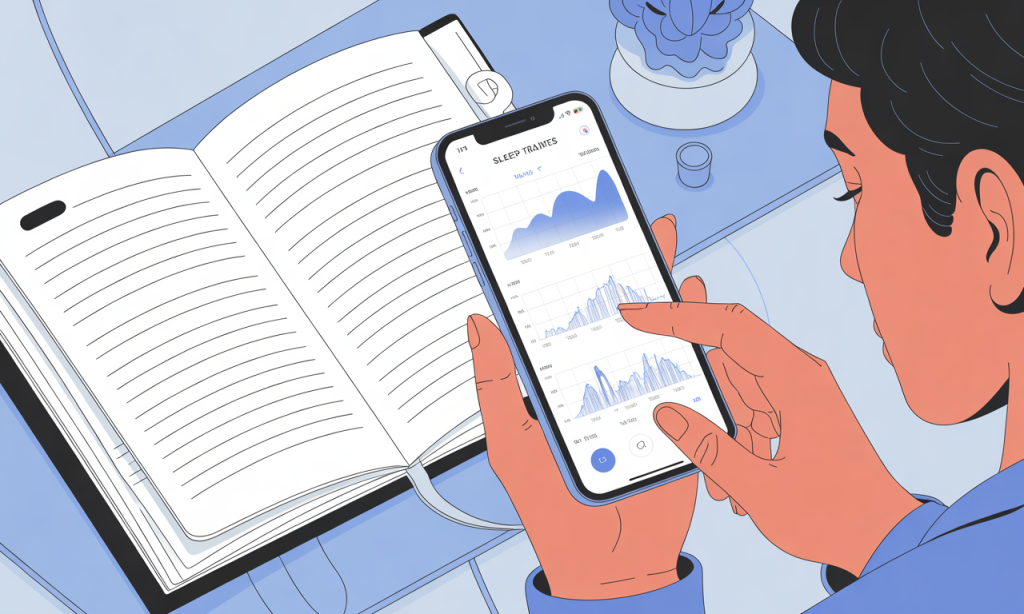
Sleep tracking devices provide useful data about consistency and duration patterns, but cannot diagnose sleep disorders. Polysomnography (overnight sleep study) remains the diagnostic gold standard when medical sleep disorders are suspected. Prioritize evidence-based treatments over unproven remedies promoted through social media.
The Neurochemistry of Temporal Consistency
Cortisol Awakening Response
Your hypothalamic-pituitary-adrenal (HPA) axis orchestrates a dramatic cortisol surge beginning approximately 30 minutes before your habitual wake time. This cortisol awakening response (CAR) provides the neurochemical impetus for transitioning from sleep to alertness. When wake times remain consistent, your HPA axis fine-tunes this anticipatory cortisol secretion, producing smoother, more energized mornings.
Irregular wake schedules disrupt this elegant preparation system, forcing your body to reactively rather than proactively manage the sleep-wake transition. The result manifests as that awful groggy, disoriented feeling when you wake at inconsistent times. Your cortisol levels haven’t yet risen appropriately because your endocrine system couldn’t predict when consciousness would be required.
Research demonstrates that consistent sleep-wake patterns optimize not just cortisol but also thyroid hormone, growth hormone, and leptin/ghrelin balance. These hormonal rhythms influence metabolism, appetite regulation, tissue repair, and immune function. Sleep irregularity doesn’t merely cause tiredness—it fundamentally dysregulates multiple endocrine axes simultaneously.
Melatonin Timing Precision
Melatonin secretion from your pineal gland typically begins 2-3 hours before your habitual bedtime, creating physiological conditions conducive to sleep initiation. This “dim light melatonin onset” (DLMO) serves as the most reliable circadian phase marker available to sleep researchers. When you maintain consistent wake times paired with strategic morning light exposure, you effectively anchor your DLMO to predictable timing.
Evening bright light exposure delays melatonin onset, while morning bright light advances it. This bidirectional photosensitivity allows you to gradually shift your entire circadian phase through strategic illumination patterns. However, inconsistent wake times undermine these adjustments by providing contradictory timing signals to your SCN.
Supplemental melatonin can support circadian shifts when used appropriately—small doses (0.3-0.5mg) taken 5-6 hours before your desired bedtime can phase-advance your rhythm. However, melatonin supplements cannot overcome fundamentally inconsistent schedules. They work synergistically with behavioral consistency rather than compensating for its absence.
Adenosine Accumulation Kinetics
The somnogen adenosine accumulates progressively throughout wakefulness, binding to neural receptors that promote sleepiness. Caffeine exerts its alerting effects by blocking these adenosine receptors, temporarily masking but not eliminating underlying sleep pressure. Your adenosine clearance occurs primarily during slow-wave sleep in the first third of your night.
Consistent wake times establish predictable adenosine accumulation patterns, making sleepiness arrival more reliable each evening. Conversely, sleeping in on weekends reduces adenosine accumulation that day, diminishing sleep pressure by your usual weeknight bedtime. This neurochemical reality explains why Sunday night insomnia follows Saturday morning sleep-ins so predictably.
Strategic caffeine timing leverages adenosine dynamics—consume coffee only before noon to avoid interfering with evening sleep pressure. Afternoon or evening caffeine blocks adenosine receptors precisely when you need that signal for sleep preparation. Respect caffeine’s 5-6 hour half-life when scheduling your final daily consumption.
Metabolic and Cardiovascular Implications
Glucose Regulation and Insulin Sensitivity
Circadian misalignment through irregular sleep schedules impairs glucose metabolism and insulin sensitivity independently of sleep duration. Adults experiencing over two hours of social jetlag demonstrate double the risk of developing type 2 diabetes even after controlling for other lifestyle factors. Your pancreatic beta cells exhibit circadian rhythmicity in insulin secretion that becomes dysregulated with temporal inconsistency.
The mechanism involves peripheral tissue clocks becoming desynchronized from central SCN timing. Your liver, muscle, and adipose tissues all maintain internal circadian oscillators coordinating metabolic processes. When central and peripheral clocks misalign due to erratic schedules, you develop metabolic inflexibility—reduced capacity to efficiently switch between glucose and fat oxidation.
Maintaining consistent wake times helps preserve metabolic synchronization across tissue systems. Research shows that establishing sleep consistency for just two weeks measurably improves glycemic control and insulin sensitivity markers. These metabolic benefits emerge remarkably quickly once circadian alignment is achieved.
Metabolic Benefits of Schedule Consistency:
- Improved insulin sensitivity and glycemic control
- Reduced type 2 diabetes risk by up to 50%
- Better appetite regulation through leptin/ghrelin balance
- Enhanced fat oxidation and metabolic flexibility
- Lower obesity risk and easier weight management
- Reduced inflammation markers including C-reactive protein
Cardiovascular Health Optimization
Sleep irregularity significantly increases cardiovascular disease risk through multiple pathways including elevated blood pressure, increased arterial stiffness, and heightened sympathetic nervous system activity. Studies of adults aged 85-105 found that consistent sleep-wake schedules correlated strongly with cardiovascular health and exceptional longevity. Your heart thrives on predictable circadian rhythms.
Blood pressure naturally dips 10-20% during sleep—the “nocturnal dipping” pattern considered protective against cardiovascular events. Social jetlag and inconsistent sleep diminish this beneficial dipping, maintaining elevated pressure throughout 24-hour periods. Consistent schedules restore normal diurnal blood pressure variation.
Additionally, irregular sleep patterns activate inflammatory cascades that promote atherosclerotic plaque formation. Chronic low-grade inflammation measured through markers like interleukin-6 and tumor necrosis factor-alpha increases substantially with sleep variability. Establishing temporal consistency represents a powerful anti-inflammatory intervention.

Frequently Asked Questions
How long does it take to adjust to a new consistent wake time?
Most adults experience noticeable improvements within one to two weeks of maintaining strict wake time consistency across all seven days. Your circadian rhythm shifts approximately 1-2 hours per day with proper light exposure timing, so adjustments of 3-4 hours may require 2-3 weeks for complete adaptation.
Individual variability exists based on your chronotype, age, and degree of initial misalignment. Be patient and maintain unwavering consistency even when the first few days feel challenging—your biological systems are recalibrating fundamental timing mechanisms.
Should I maintain the same wake time even if I sleep poorly one night?
Yes, absolutely maintain your consistent wake time regardless of the previous night’s sleep quality. This consistency prevents a vicious cycle where poor sleep leads to sleeping in, which shifts your circadian rhythm later, causing difficulty falling asleep the next night.
Your body will naturally compensate by increasing sleep pressure the following evening, making it easier to fall asleep at your target bedtime. Trust the homeostatic process rather than attempting to “make up” lost sleep through schedule disruption. Consistency always takes priority over attempting to recover individual poor nights.
Can I use weekend sleep-ins to catch up on weekday sleep debt?
No, weekend sleep-ins actually perpetuate sleep debt rather than resolving it by creating social jetlag. When you sleep significantly later on weekends, you shift your circadian phase backward, making Monday morning feel like waking at 4 AM would for someone on a consistent schedule.
This pattern creates a weekly cycle of misalignment and recovery that never allows full adaptation. Instead, address insufficient weeknight sleep by gradually moving your bedtime earlier in 15-minute increments while maintaining your consistent wake time. This approach actually reduces sleep debt without sacrificing circadian alignment.
What if my work schedule includes rotating shifts?
Shift work presents legitimate circadian challenges, but modified consistency principles still apply. Maintain the same wake time for all consecutive days on each shift rotation—consistency within shift blocks matters even when transitions between blocks disrupt alignment.
Use strategic bright light exposure at the beginning of night shifts to help phase-delay your rhythm by approximately 1 hour daily. Blackout curtains and sleep masks during daytime sleep periods improve sleep consolidation. During transition days between shifts, prioritize maintaining your wake time over bedtime since rising hour provides stronger circadian anchoring.
How does age affect wake time consistency requirements?
Wake time consistency benefits adults across all age ranges from 20-70 and beyond, though implementation strategies may require modification. Older adults generally experience earlier circadian phase preference (advanced sleep phase) and may naturally gravitate toward earlier wake times.
Research on adults aged 85-105 found that sleep-wake consistency correlated strongly with longevity and cardiovascular health, suggesting benefits persist throughout the lifespan. Younger adults may need to consciously resist social pressures for late weekend nights that sabotage morning consistency. Age-appropriate wake times that allow adequate sleep duration matter more than specific clock times.
Is it better to go to bed later or wake up earlier to match my schedule?
Prioritize maintaining your consistent wake time and allow your bedtime to adjust naturally through increased sleep pressure. Your wake time serves as the stronger circadian anchor because it can be combined with immediate bright light exposure, providing powerful synchronization signals.
If you’re not sleepy at your target bedtime, stay up later rather than lying in bed awake, but absolutely maintain your fixed morning rising time. Within several days, your body will naturally begin feeling sleepy earlier as homeostatic pressure builds appropriately. Forcing an arbitrary bedtime without maintaining wake time consistency produces frustration without circadian benefit.
Can light therapy boxes really replace natural sunlight for wake time adjustment?
Yes, 10,000-lux light therapy boxes effectively substitute for natural sunlight in advancing your circadian phase when used correctly. Position yourself within three feet of the device for 20-30 minutes immediately upon waking or shortly thereafter.
Even a single 30-minute exposure produces approximately 75% of the phase-advancing effect achieved with two hours of light therapy. Natural sunlight provides optimal full-spectrum illumination plus outdoor exposure benefits, but light therapy boxes offer reliable alternatives during winter months, for early risers before dawn, or for those with limited outdoor access. Consistency and timing matter more than light source.
Should I eliminate naps completely when establishing consistent wake times?
Initially, yes—eliminate daytime napping for the first 2-3 weeks when establishing your consistent wake time schedule. This maximizes homeostatic sleep pressure at bedtime, facilitating faster sleep onset and better consolidation.
Once you’ve established reliable nighttime sleep with your fixed morning schedule, strategic brief naps (10-20 minutes) between 1-4 PM can be cautiously reintroduced. Monitor whether napping affects your ability to fall asleep at your target bedtime—individual responses vary considerably. If afternoon naps interfere with nighttime sleep, eliminate them permanently to maintain optimal circadian alignment.
What supplements can help adjust to a new consistent wake time?
Low-dose melatonin (0.3-0.5mg) taken 5-6 hours before your desired bedtime can support circadian phase advances when combined with consistent wake times and morning light exposure. However, supplements cannot compensate for behavioral inconsistency—they work synergistically with rather than replacing schedule regularity.
Avoid high-dose melatonin products (3-10mg), which provide pharmacological sedation rather than circadian signaling and may cause next-day grogginess. Caffeine restriction after noon helps preserve evening sleep pressure. Magnesium glycinate (300-400mg before bed) may support sleep quality but doesn’t specifically affect circadian timing. Always consult healthcare providers before starting supplements, especially with existing medical conditions.
How do I maintain wake time consistency when I feel exhausted from accumulated sleep debt?
Acknowledge the temporary discomfort while trusting the process—your exhaustion validates that your body finally has permission to recognize genuine sleep needs. Rather than abandoning consistency, extend your sleep opportunity by moving bedtime earlier in 15-minute increments every 3-4 days while maintaining your fixed wake time.
This approach gradually expands your sleep window without disrupting circadian alignment. Strategic sleep banking before demanding periods proves more effective than attempting recovery afterward. Within 2-3 weeks of consistent scheduling with adequate opportunity, your sleep debt will substantially resolve and daytime energy will improve dramatically. Short-term discipline produces long-term vitality.
Sustaining Long-Term Schedule Integrity
Building Environmental Supports
Your physical environment profoundly influences wake time maintenance through subtle cues and obstacles. Position your alarm clock or smartphone across the room, requiring physical movement to silence it—this simple intervention prevents semi-conscious snooze pressing that sabotages consistency. Consider sunrise simulation alarm clocks that gradually increase light intensity 30 minutes before your target wake time, providing gentler biological awakening.
Optimize your bedroom environment for sleep quality: maintain 65-68°F temperature, eliminate light intrusion through blackout curtains, minimize noise with white noise machines or earplugs, and reserve the space exclusively for sleep and intimacy. These environmental modifications work synergistically with schedule consistency to enhance overall sleep quality.
Create morning routines you genuinely anticipate—premium coffee, enjoyable podcasts, energizing music, or appealing breakfast. Positive morning associations make your consistent wake time psychologically rewarding rather than punitive. Schedule meaningful early activities on weekends (hiking, farmers markets, breakfast with friends) to naturally motivate timely rising without relying solely on willpower.
Social Accountability Mechanisms
Public commitment dramatically increases adherence to behavioral changes. Share your consistent wake time goal with household members, requesting their support in respecting your schedule. Partner with a friend pursuing similar improvements for mutual accountability through morning text check-ins or shared wake-up calls.
Consider social media accountability if comfortable—posting daily wake time confirmations creates external motivation during challenging initial weeks. Alternatively, use commitment apps that impose financial penalties for missed targets, leveraging loss aversion psychology. Stakes don’t need to be high; symbolic consequences often suffice to maintain consistency.
Communicate your schedule to social contacts who might pressure you toward late nights. Declining invitations that compromise your sleep timing becomes easier when you’ve articulated your health priorities. True friends respect boundaries that support your wellbeing. Your consistent schedule might even inspire others to address their own sleep irregularities.
Cognitive Reframing Strategies
Your psychological narrative about consistent wake times substantially impacts adherence. Reframe early weekend mornings as opportunities for peaceful productivity, enjoyable activities, or restorative practices rather than sacrifices of deserved rest. Weekend morning hours offer unique benefits—quieter environments, less crowded venues, and calm psychological space.
Challenge the cultural narrative that sleeping late represents luxury or reward. In reality, temporal consistency provides the ultimate luxury—optimized health, enhanced energy, superior cognitive function, and reduced disease risk. The perceived “cost” of weekend morning consistency pales compared to the devastating price of chronic circadian misalignment.
When tempted to deviate from your schedule, employ the “10-minute rule”—commit to getting up at your target time and reassess how you feel after 10 minutes of movement and light exposure. The initial awakening challenge usually dissipates rapidly once you’re vertical and moving. Sleep inertia passes quickly; circadian misalignment persists for days.
Conclusion
Establishing a consistent wake time across all seven days represents the single most powerful intervention for fixing shifting sleep schedules in busy adults.
This behavioral cornerstone synchronizes your circadian rhythm, optimizes hormonal patterns, reduces mortality risk by 20-48%, and delivers profound benefits for cardiovascular health, metabolic function, cognitive performance, and psychological wellbeing.
The seven evidence-based strategies outlined in this guide—anchoring your morning hour, harnessing strategic light exposure, implementing sleep restriction methodology, practicing stimulus control, optimizing napping windows, engineering wind-down rituals, and maintaining weekend consistency—work synergistically to reclaim restorative rest.
Your biological systems crave predictability, rewarding temporal consistency with enhanced vitality and resilience. Begin implementing these strategies today, maintaining unwavering commitment even when initial adjustment feels challenging.
Within 2-3 weeks, you’ll experience the transformative effects of circadian alignment—waking naturally with energy, thinking more clearly, managing stress effectively, and enjoying genuinely restorative sleep. Ready to optimize other aspects of your health? Explore these related resources.