

Achieving sustainable weight reduction without compromising muscular integrity demands precision in metabolic arithmetic. Understanding calorie deficit calculation empowers health-conscious adults to orchestrate fat oxidation while safeguarding lean tissue—a delicate physiological equilibrium that separates successful transformation from counterproductive starvation. This comprehensive guide unveils evidence-based methodologies for determining your optimal energetic shortfall, combining scientific rigor with practical applicability. Whether you’re navigating your inaugural weight management journey or refining existing protocols, mastering these calculation techniques positions you for measurable, maintainable results that honor your body’s metabolic requirements while facilitating progressive adipose reduction across sustainable timeframes.
Understanding Basal Metabolic Requirements
What BMR Represents
Your basal metabolic rate constitutes the caloric expenditure necessary for fundamental physiological operations—cardiac function, respiratory mechanics, cellular regeneration, and neurological activity. This baseline energy consumption occurs independent of physical exertion. The Mifflin-St Jeor equation, developed in 1990 using contemporary population data, demonstrates superior accuracy compared to the antiquated Harris-Benedict formula from 1918. For males, the calculation follows: BMR equals 10 multiplied by weight in kilograms, plus 6.25 multiplied by height in centimeters, minus 5 multiplied by age in years, plus 5.
Gender-Specific Calculations
Females require a modified formula reflecting hormonal and compositional differences. The female equation subtracts 161 instead of adding 5: BMR equals 10 multiplied by weight in kilograms, plus 6.25 multiplied by height in centimeters, minus 5 multiplied by age in years, minus 161. Research confirms the Mifflin-St Jeor methodology predicts resting energy expenditure within 10 percent of measured values, substantially outperforming Harris-Benedict calculations that overestimate by 7-24 percent.
BMR Accuracy Considerations
Individual metabolic variations mean calculated BMR provides estimations rather than absolute precision. Factors including thyroid function, medication usage, genetic predisposition, and body composition influence actual metabolic rates. Indirect calorimetry represents the gold standard measurement technique, though predictive equations offer practical alternatives for most individuals.
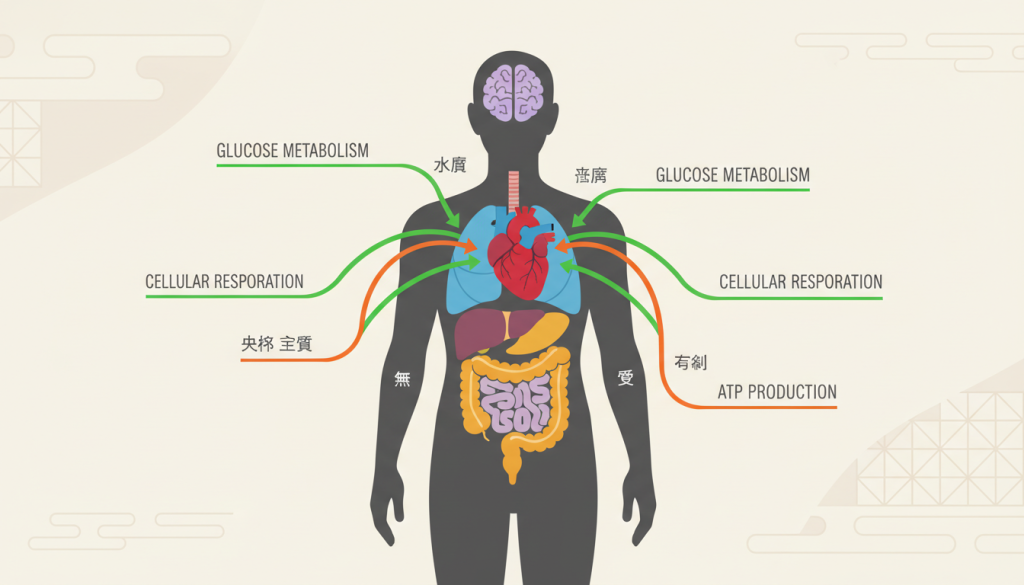
Total Daily Energy Expenditure Mechanics
TDEE Multiplication Factors
Converting BMR to total daily energy expenditure requires multiplying by activity coefficients reflecting your movement patterns. Sedentary lifestyles (minimal exercise, desk occupation) utilize a 1.2 multiplier. Light activity (exercise 1-3 days weekly) employs 1.375. Moderate activity (exercise 3-5 days weekly) uses 1.55. Active individuals (exercise 6-7 days weekly) multiply by 1.725, while extremely active persons (physical occupation plus daily training) use 1.9.
NEAT Integration Importance
Non-exercise activity thermogenesis encompasses caloric expenditure from fidgeting, occupational movement, stair climbing, and spontaneous physical activity beyond structured exercise. NEAT variability between individuals can range from 200-800 calories daily. Accurately assessing your authentic activity stratum prevents overestimation—a common pitfall leading to inadequate deficits.
Calculating Personal TDEE
A 35-year-old male weighing 90 kilograms at 180 centimeters height exhibits a BMR of approximately 1,900 calories. With moderate activity, his TDEE reaches 2,945 calories (1,900 multiplied by 1.55). This maintenance threshold represents the equilibrium point where caloric intake neither induces weight gain nor reduction.
Safe Deficit Parameters
Standard Deficit Recommendations
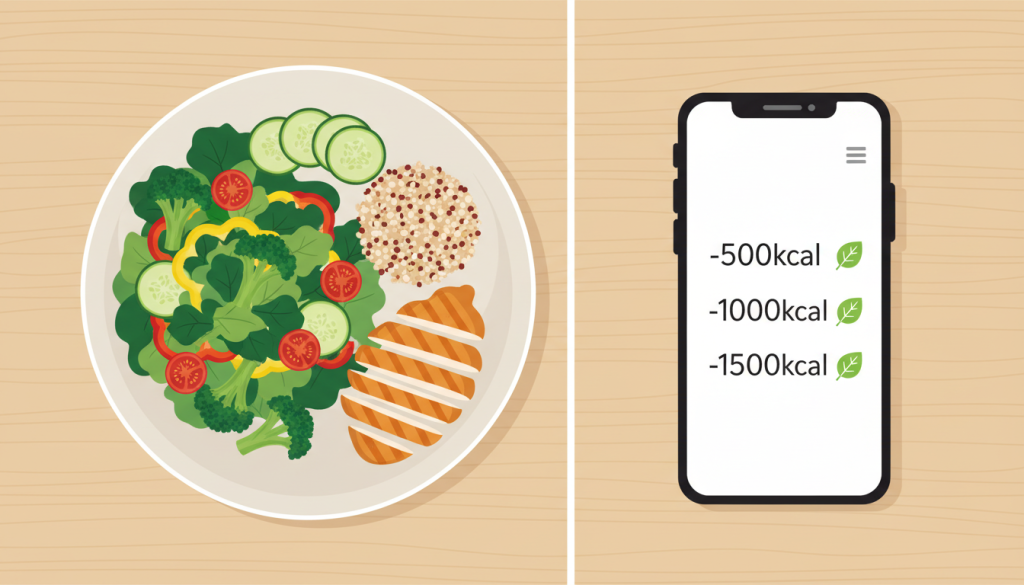
Nutritional authorities advocate daily deficits between 300-700 calories for sustainable fat reduction. The frequently cited 500-calorie deficit theoretically produces one pound weekly loss, based on the 3,500-calorie equivalence per pound of adipose tissue. Conservative deficits minimize metabolic adaptation, hunger escalation, and muscular catabolism.
Maximum Deficit Thresholds
Individuals with elevated baseline requirements may safely implement 1,000-calorie deficits without adverse consequences. However, exceeding this magnitude frequently triggers metabolic downregulation, elevates cortisol secretion, and accelerates lean tissue degradation. Females should rarely consume below 1,600 daily calories; males should avoid dropping beneath 2,000 calories except under medical supervision.
Deficit Percentage Approach
Calculating deficits as percentages rather than absolute values accommodates individual variance. A 15-25 percent reduction from TDEE provides a moderate framework. This method scales appropriately whether your maintenance stands at 2,000 or 3,500 calories, ensuring proportional restriction.
Mifflin-St Jeor Formula Mastery
Step-by-Step Male Calculation
Begin with body weight in kilograms (pounds divided by 2.205). Multiply weight by 10. Measure height in centimeters (inches multiplied by 2.54) and multiply by 6.25. Multiply age by 5. Combine these values: (10 times weight) plus (6.25 times height) minus (5 times age) plus 5 equals male BMR.
Step-by-Step Female Calculation
Follow identical procedures through height multiplication. The divergence occurs at the terminal constant: (10 times weight) plus (6.25 times height) minus (5 times age) minus 161 equals female BMR. This 166-calorie differential reflects average compositional and hormonal distinctions between sexes.
Converting to Actionable Targets
After determining BMR, select your appropriate activity multiplier to establish TDEE. Subtract your chosen deficit (typically 500 calories) from TDEE to identify your daily intake target. Monitor results across 2-3 weeks before adjusting, as water fluctuations obscure immediate trends.
Katch-McArdle Lean Mass Method
Body Composition Prerequisites
The Katch-McArdle formula incorporates lean body mass percentages, offering enhanced accuracy for individuals with atypical muscularity. This approach requires determining body fat percentage through DEXA scanning, bioelectrical impedance analysis, or skinfold calipers. Lean body mass equals total weight multiplied by (1 minus body fat decimal).
Calculation Methodology
The Katch-McArdle equation calculates BMR as 370 plus (21.6 multiplied by lean body mass in kilograms). A 180-pound male with 20 percent body fat possesses 144 pounds (65.3 kilograms) lean mass. His BMR calculates to 1,781 calories (370 plus 21.6 times 65.3). This method proves superior for muscular individuals whose conventional equations underestimate requirements.
When to Choose This Approach
Athletes, bodybuilders, and individuals with substantial muscle development benefit from Katch-McArdle precision. Conversely, those lacking accurate body composition data should default to Mifflin-St Jeor calculations. The 3-5 percent accuracy improvement justifies the additional measurement complexity for serious trainees.
Harris-Benedict Historical Context
Original Formula Structure
Developed in 1918, the Harris-Benedict equations predate modern nutritional understanding. Males calculate BMR as 66 plus (13.7 times weight in kilograms) plus (5 times height in centimeters) minus (6.8 times age). Females use 655 plus (9.6 times weight in kilograms) plus (1.8 times height in centimeters) minus (4.7 times age).
Accuracy Limitations
Contemporary research reveals Harris-Benedict consistently overestimates energy expenditure by 7-24 percent, particularly in adults under age 50. This systematic error stems from outdated population sampling reflecting 1918 demographics—individuals averaged smaller stature with higher physical activity levels than modern cohorts.
When to Avoid
Healthcare professionals increasingly recommend Mifflin-St Jeor as the preferred estimation tool. The Harris-Benedict formula maintains utility only in group-level research contexts or resource-limited settings lacking alternative calculation capacity. Individual applications risk establishing inappropriately elevated caloric targets.
Online Calculator Validation
Reputable Calculator Sources
National Academy of Sports Medicine, Mayo Clinic, and registered dietitian-endorsed platforms provide validated calculation tools. These resources implement peer-reviewed formulas with appropriate activity multipliers. Avoid commercial calculators promising unrealistic results or lacking transparent methodology.
Cross-Referencing Results
Calculate your requirements using multiple reputable sources and average the outputs. Variance exceeding 200 calories warrants rechecking input accuracy. Most discrepancies stem from activity level misclassification rather than formula differences.
Adjusting for Individual Response
Calculations provide starting estimates requiring real-world validation. Track weight changes across three weeks. Losing faster than 1-2 pounds weekly suggests excessive restriction; slower progress indicates insufficient deficit. Adjust intake by 200-calorie increments based on observed trends.
Protein Intake Preservation Protocol
Elevated Protein Requirements
During caloric restriction, protein demands escalate to 0.7-1.0 grams per pound of body weight to preserve lean tissue. Research demonstrates higher protein intake significantly prevents muscle mass decline in individuals pursuing weight reduction. A 180-pound male requires 126-180 grams daily.
Timing and Distribution
Distributing protein evenly across meals optimizes muscle protein synthesis. Aim for 25-40 grams per feeding, consumed every 3-4 hours. This pattern maintains positive nitrogen balance despite energetic restriction.
Quality Source Selection
Prioritize complete proteins containing all essential amino acids: poultry, fish, eggs, dairy, soy, and legume combinations. Leucine-rich sources particularly stimulate anabolic signaling during deficits. Supplemental protein powder offers convenient, cost-effective options for meeting elevated targets.
Resistance Training Integration
Minimum Frequency Standards
Implement resistance training twice weekly minimum to signal muscular preservation necessity. Evidence demonstrates resistance exercise during diet-related weight loss substantially reduces fat-free mass degradation. Three to four weekly sessions optimize lean tissue retention.
Volume and Intensity Guidelines
Maintain or gradually increase training volume during deficits rather than reducing load. Research indicates escalating resistance training volume during caloric restriction proves more effective for ameliorating atrophy than volume reductions. Progressive overload stimulates myofibrillar protein synthesis despite energetic constraints.
Exercise Selection Priorities
Compound movements—squats, deadlifts, presses, rows—recruit maximum muscle mass with superior hormonal responses. Bodyweight exercises, resistance bands, and free weights all effectively preserve muscularity when progressive tension continues. Equipment accessibility matters less than consistent application.

Metabolic Adaptation Recognition
Adaptive Thermogenesis Phenomenon
Prolonged caloric restriction triggers physiological efficiency improvements reducing energy expenditure beyond predictions based solely on mass loss. Resting metabolic rate decreases can reach 90-110 calories daily after significant weight reduction. This adaptation explains weight loss plateaus despite continued deficit adherence.
Hormonal Regulation Changes
Restriction disrupts leptin signaling, elevates ghrelin secretion, and reduces thyroid hormone conversion. These alterations increase hunger perception while decreasing total daily energy expenditure. Metabolic adaptation represents evolutionary survival mechanisms protecting against perceived starvation.
Mitigation Strategies
Diet breaks consuming maintenance calories for 1-2 weeks every 8-12 weeks partially reverse metabolic adaptation. Refeed days providing carbohydrate surpluses temporarily restore leptin levels. Resistance training attenuates adaptation severity by maintaining muscle mass—the primary determinant of metabolic rate.
Tracking and Measurement Protocols
Scale Weight Interpretation
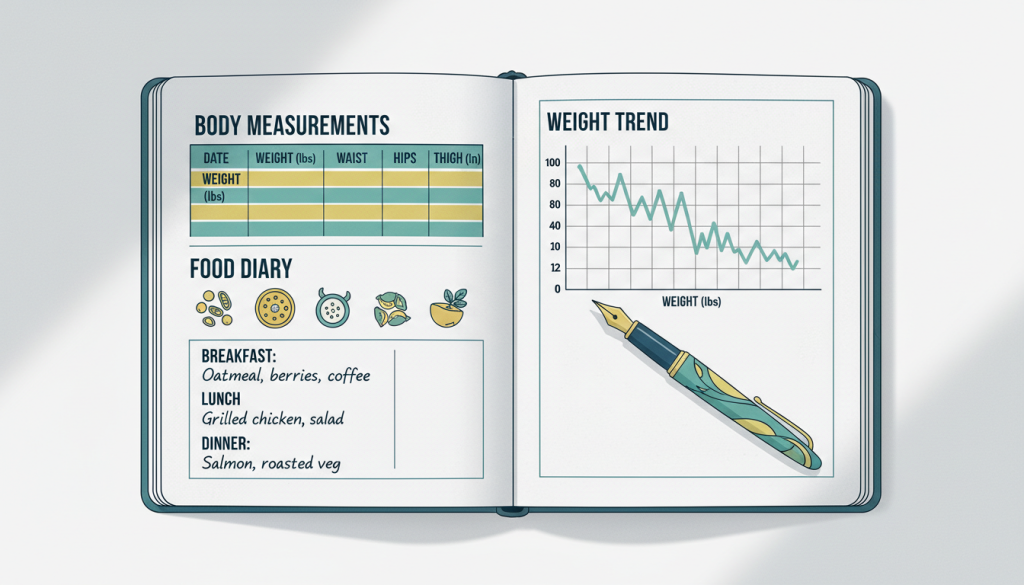
Weigh daily under identical conditions (morning, post-void, pre-feeding) and calculate weekly averages. Daily fluctuations reflecting hydration, glycogen storage, and digestive contents obscure fat loss trends. Weekly averages smooth volatility revealing authentic trajectory.
Body Composition Monitoring
DEXA scanning provides gold-standard body composition assessment, quantifying fat mass, lean mass, and bone density with superior precision. Bioelectrical impedance devices like InBody offer reasonable alternatives tracking compositional changes despite absolute accuracy limitations. Monthly assessments verify fat reduction without muscular compromise.
Circumference Measurements
Measure waist, hip, chest, arm, and thigh circumferences biweekly using consistent landmarks and tension. Waist reduction with stable limb measurements confirms preferential adipose mobilization. Photography under standardized lighting conditions documents visual changes scales miss.
Plateau Resolution Tactics
Recalculating Reduced Requirements
Every 10-15 pounds lost necessitates recalculating BMR and TDEE using new body weight. Reduced mass demands fewer calories for maintenance, meaning original deficits gradually diminish. Recalibrating targets maintains appropriate energetic shortfall.
Strategic Refeed Implementation
Incorporate one day weekly consuming maintenance calories with elevated carbohydrate emphasis. This temporarily restores leptin signaling, replenishes glycogen stores, and provides psychological reprieve without derailing progress. Total weekly deficit remains substantial despite single elevated day.
Activity Expenditure Augmentation
Increasing daily step counts by 2,000-3,000 steps elevates NEAT without triggering additional hunger or fatigue associated with formal exercise. Walking, standing desks, and active hobbies combat sedentary energy conservation. This approach bypasses some adaptive responses targeting structured training.

Reverse Dieting Principles
Gradual Caloric Restoration
After achieving target weight, incrementally increase intake by 50-100 calories weekly rather than abruptly returning to maintenance. This gradual escalation allows metabolic rate restoration while minimizing fat regain. Males might increase 8.5 percent weekly; females 11.7 percent.
Metabolic Rate Recovery
Research indicates metabolic adaptation isn’t permanent—gradual caloric increases support metabolism restoration toward pre-diet levels. However, studies show reverse dieting doesn’t necessarily prevent weight regain better than immediate maintenance return. Individual response varies considerably.
Psychological Sustainability Benefits
Reverse dieting provides structured transition reducing anxiety about post-diet eating. The methodical approach offers control and continued tracking, smoothing psychological adjustment from restriction to maintenance. Some individuals find this framework essential for long-term adherence despite mixed physiological evidence.
Hydration Impact Considerations
Water Weight Fluctuations
Glycogen storage binds 3-4 grams of water per gram of carbohydrate. Carbohydrate restriction rapidly depletes glycogen, producing 3-7 pounds of water loss masking fat loss rates. Refeeding temporarily restores this water, creating apparent weight gain despite continued fat oxidation.
Adequate Fluid Intake
Consume minimum half your body weight in ounces daily to support lipolysis and waste elimination. Inadequate hydration impairs fat metabolism, elevates perceived exertion, and confounds body composition measurements. Urine color targeting pale yellow indicates appropriate hydration.
Sodium Balance Management
Excessive sodium intake promotes fluid retention, particularly in females during luteal menstrual phases. However, severe sodium restriction during deficits can impair performance and electrolyte balance. Moderate, consistent intake (2,300-3,000 milligrams daily) optimizes homeostasis.
Macronutrient Distribution Strategy
Protein Priority Establishment
Allocate 0.7-1.0 grams per pound body weight to protein first, consuming 25-35 percent of total calories. This non-negotiable foundation preserves lean tissue and provides superior satiety compared to fats or carbohydrates. Protein’s thermic effect burns 20-30 percent of consumed calories during digestion.
Fat Intake Requirements
Consume minimum 0.3 grams per pound body weight (20-30 percent of calories) supporting hormonal production, vitamin absorption, and satiety. Inadequate fat intake below 15 percent total calories disrupts testosterone and estrogen synthesis, impairing recovery and mood. Prioritize unsaturated sources: avocados, nuts, olive oil, fatty fish.
Carbohydrate Allocation Flexibility
Allocate remaining calories to carbohydrates after establishing protein and fat targets. Active individuals training intensely benefit from higher carbohydrate proportions (40-50 percent) supporting glycogen replenishment and performance. Sedentary persons tolerate lower carbohydrate intakes (25-35 percent) without performance detriment.
Sleep and Recovery Optimization
Sleep Duration Requirements
Target 7-9 hours nightly to optimize hormonal milieu supporting fat loss and muscle preservation. Sleep deprivation elevates cortisol, reduces leptin sensitivity, and increases ghrelin secretion—hormonal patterns promoting fat storage and muscle catabolism. Recovery quality impacts metabolic rate independent of caloric intake.
Stress Management Integration
Chronic psychological stress elevates cortisol chronically, promoting abdominal fat accumulation and muscle degradation regardless of deficit appropriateness. Implement stress-reduction practices: meditation, nature exposure, social connection, adequate leisure. Physiological stress from excessive training combined with aggressive deficits amplifies maladaptive responses.
Deload Weeks Implementation
Every 4-6 weeks, reduce training volume by 40-50 percent while maintaining caloric targets. This strategic recovery period allows connective tissue repair, nervous system restoration, and hormonal rebalancing. Paradoxically, periodic deloads enhance long-term progress by preventing overtraining syndrome.
Individual Variation Factors
Age-Related Adjustments
Metabolic rates decline approximately 2-3 percent per decade after age 30 due to muscle mass loss and cellular efficiency changes. Older adults may require more conservative deficits (300-400 calories) and elevated protein intakes (1.0-1.2 grams per pound) to preserve lean tissue. Recovery capacity diminishes, necessitating additional rest between training sessions.
Gender-Specific Considerations
Females generally possess lower absolute metabolic rates due to reduced muscle mass and smaller body size. Women demonstrate superior relative fat oxidation capacity and lean mass sparing during deficits compared to males. Menstrual cycle phases influence water retention, appetite, and energy levels, requiring longer assessment timeframes.
Training Experience Impact
Novice trainees occasionally achieve simultaneous muscle gain and fat loss—body recomposition—particularly with adequate protein and resistance training. Advanced athletes with established muscularity rarely demonstrate this phenomenon, requiring specialized approaches like lean bulking and cutting phases. Training history profoundly influences realistic expectation setting.
Supplement Considerations
Evidence-Based Options
Caffeine modestly increases metabolic rate and fat oxidation by 3-11 percent when consumed 200-400 milligrams daily. Creatine monohydrate supports training performance during deficits, enabling volume maintenance crucial for muscle preservation. Protein powder offers convenient, cost-effective supplementation reaching elevated targets.
Micronutrient Adequacy
Caloric restriction increases micronutrient deficiency risk, particularly calcium, vitamin D, iron, magnesium, and B-vitamins. Consider comprehensive multivitamin supplementation during extended deficits. Vitamin D specifically influences insulin sensitivity and inflammation regulation relevant to fat loss.
Ineffective Products Avoidance
Fat burners claiming dramatic results typically contain inadequate ingredient dosages or unproven compounds. Thermogenic supplements beyond caffeine rarely produce clinically meaningful effects justifying their cost. Prioritize whole food nutrition and fundamental deficit establishment over supplemental shortcuts.
Long-Term Maintenance Strategies
Habit Formation Emphasis
Sustainable weight management depends on behavioral patterns rather than temporary restriction. Develop consistent meal timing, grocery shopping routines, meal preparation systems, and activity habits during deficit phases to ensure continuation during maintenance. Temporary dieting approaches guarantee eventual regain.
Flexible Eating Frameworks
Rigid dietary rules increase psychological distress and disordered eating patterns. Implement flexible approaches allowing occasional indulgences within weekly caloric parameters. The 80/20 principle—nutrient-dense foods comprising 80 percent of intake—permits social eating and enjoyment without derailing progress.
Continuous Self-Monitoring
Individuals maintaining significant weight loss long-term consistently track intake, weight, and activity levels. This ongoing vigilance enables rapid intervention when regain begins rather than allowing substantial backsliding. Digital tools, apps, and wearable devices facilitate sustainable monitoring without excessive burden.
Frequently Asked Questions
What is the safest calorie deficit for losing weight without losing muscle?
A deficit of 300-700 calories daily, or approximately 15-25 percent below your total daily energy expenditure, represents the safest range for fat loss while preserving muscle mass. Research demonstrates that deficits of 500-1,000 calories promote healthy weight loss of 1-2 pounds monthly for most individuals. Combining this moderate deficit with adequate protein intake (0.7-1.0 grams per pound of body weight) and resistance training at least twice weekly substantially reduces muscle tissue loss. Excessive deficits exceeding 1,000 calories daily frequently trigger metabolic adaptation, elevate stress hormones, and accelerate lean tissue degradation.
How do I calculate my BMR for calorie deficit planning?
The Mifflin-St Jeor equation provides the most accurate BMR calculation for contemporary populations. Males calculate BMR as: (10 × weight in kg) + (6.25 × height in cm) – (5 × age in years) + 5. Females use the same formula but subtract 161 instead of adding 5. After determining BMR, multiply by your activity factor: 1.2 for sedentary, 1.375 for light activity, 1.55 for moderate activity, 1.725 for very active, or 1.9 for extremely active lifestyles. The resulting total daily energy expenditure represents your maintenance calories, from which you subtract your chosen deficit.
How much protein do I need to prevent muscle loss during a calorie deficit?
During caloric restriction, protein requirements increase to 0.7-1.0 grams per pound of body weight to preserve lean tissue. Research demonstrates that higher protein intake significantly prevents muscle mass decline in individuals pursuing weight reduction. Studies indicate that intake of 1.0-1.2 grams per kilogram body weight daily proves more effective for preserving lean muscle mass, functional performance, and body composition than standard recommendations. Distribute protein evenly across meals, targeting 25-40 grams per feeding consumed every 3-4 hours to optimize muscle protein synthesis. Prioritize complete protein sources containing all essential amino acids: poultry, fish, eggs, dairy, soy, and legume combinations.
What is metabolic adaptation and how does it affect my calorie deficit?
Metabolic adaptation, also called adaptive thermogenesis, describes the physiological efficiency improvements that reduce energy expenditure beyond predictions based solely on weight loss. Resting metabolic rate decreases can reach 90-110 calories daily after significant weight reduction, with research showing adaptation immediately after weight loss is approximately 2.4 times larger than after a weight stabilization period. This phenomenon occurs through decreased thyroid hormone conversion, reduced leptin signaling, elevated ghrelin secretion, and diminished mitochondrial uncoupling protein activity. Metabolic adaptation explains weight loss plateaus despite continued deficit adherence and represents evolutionary survival mechanisms protecting against perceived starvation.
How often should I recalculate my calorie deficit during weight loss?
Recalculate your BMR and TDEE every 10-15 pounds of weight loss using your new body weight. Reduced body mass demands fewer calories for maintenance, meaning your original deficit gradually diminishes as you lose weight. Failing to recalibrate targets results in progressively smaller energetic shortfalls that slow or halt continued progress. Additionally, reassess your activity multiplier if your exercise patterns or daily movement levels change significantly during your weight loss journey. Track your actual weight loss rate across 2-3 weeks—if you’re losing faster than 1-2 pounds weekly, your deficit may be excessive; slower progress indicates insufficient deficit requiring 200-calorie adjustments.
Should I do cardio or resistance training during a calorie deficit?
Resistance training takes priority during caloric deficits because it signals muscular preservation necessity and substantially reduces fat-free mass degradation. Evidence demonstrates that maintaining or gradually increasing resistance training volume during caloric restriction proves more effective for ameliorating atrophy than volume reductions. Implement resistance training at least twice weekly minimum, with three to four weekly sessions optimizing lean tissue retention. Cardio provides additional caloric expenditure but doesn’t protect muscle tissue effectively; excessive cardio combined with aggressive deficits can accelerate muscle loss. A balanced approach incorporates 3-4 resistance sessions weekly supplemented with moderate cardio (walking, cycling) for cardiovascular health and additional energy expenditure.
What body composition measurement method is most accurate for tracking fat loss?
DEXA scanning provides gold-standard body composition assessment, directly measuring fat mass, lean mass, and bone density with superior precision regardless of hydration levels or body type. DEXA can assess regional fat distribution, measure bone mineral density, and quantify visceral fat surrounding organs. Bioelectrical impedance devices like InBody offer reasonable alternatives for tracking compositional changes over time, though they estimate rather than directly measure and show sensitivity to hydration status. Monthly DEXA or InBody assessments verify fat reduction without muscular compromise more reliably than scale weight alone. Supplement body composition testing with circumference measurements and progress photography under standardized conditions for comprehensive tracking.
Can I gain muscle while in a calorie deficit?
Novice trainees with limited training history occasionally achieve simultaneous muscle gain and fat loss—body recomposition—particularly when consuming adequate protein (0.7-1.0 grams per pound) and implementing progressive resistance training. However, advanced athletes with established muscularity rarely demonstrate this phenomenon because they’ve already optimized their muscle-building genetic potential. Body recomposition requires modest deficits (15-20 percent below TDEE), elevated protein intake, and consistent resistance training emphasizing progressive overload. Most individuals with training experience achieve better long-term results through distinct phases: muscle-building phases with slight caloric surplus followed by fat-loss phases with moderate deficit.
What is reverse dieting and do I need it after my calorie deficit?
Reverse dieting involves gradually increasing caloric intake by 50-100 calories weekly after reaching your target weight rather than abruptly returning to maintenance levels. The theory suggests this gradual escalation allows metabolic rate restoration while minimizing fat regain, with males potentially increasing 8.5 percent weekly and females 11.7 percent. However, recent research shows reverse dieting doesn’t necessarily prevent weight regain better than immediately returning to newly calculated maintenance calories or eating intuitively. Some individuals gain more relative weight following reverse dieting compared to less structured approaches, though differences didn’t reach statistical significance. Reverse dieting may provide psychological benefits through structured transition and continued tracking habits, though physiological advantages remain uncertain.
How do I know if my calorie deficit calculation is working correctly?
Track scale weight daily under identical conditions—morning, post-void, pre-feeding—and calculate weekly averages to smooth daily fluctuations reflecting hydration, glycogen storage, and digestive contents. Target weight loss of 0.5-1 percent body weight weekly, translating to 1-2 pounds weekly for most individuals. Losing faster than this rate suggests excessive restriction requiring caloric increase; slower progress indicates insufficient deficit warranting 200-calorie reduction. Monitor body composition monthly through DEXA, InBody, or circumference measurements to verify you’re losing fat rather than muscle tissue. Additionally, assess energy levels, training performance, sleep quality, and hunger—excessive fatigue, strength loss, sleep disruption, or overwhelming hunger signal deficit inappropriateness requiring adjustment.
Taking Action on Your Transformation
Mastering calorie deficit calculation transcends mathematical precision—it represents the cornerstone of intelligent, sustainable body recomposition that honors metabolic integrity while facilitating measurable adipose reduction. Implementation trumps information; begin by calculating your personalized TDEE using the Mifflin-St Jeor formula, establish a moderate 500-calorie deficit, prioritize protein intake at 0.7-1.0 grams per pound body weight, and commit to resistance training twice weekly minimum. Track weekly weight averages and monthly body composition assessments, adjusting your approach based on observed results rather than arbitrary timelines. Remember that metabolic adaptation, hormonal fluctuations, and individual variance mean your journey unfolds uniquely—patience, consistency, and data-driven refinement generate lasting transformation far exceeding aggressive shortcuts. Click here for more related posts.