
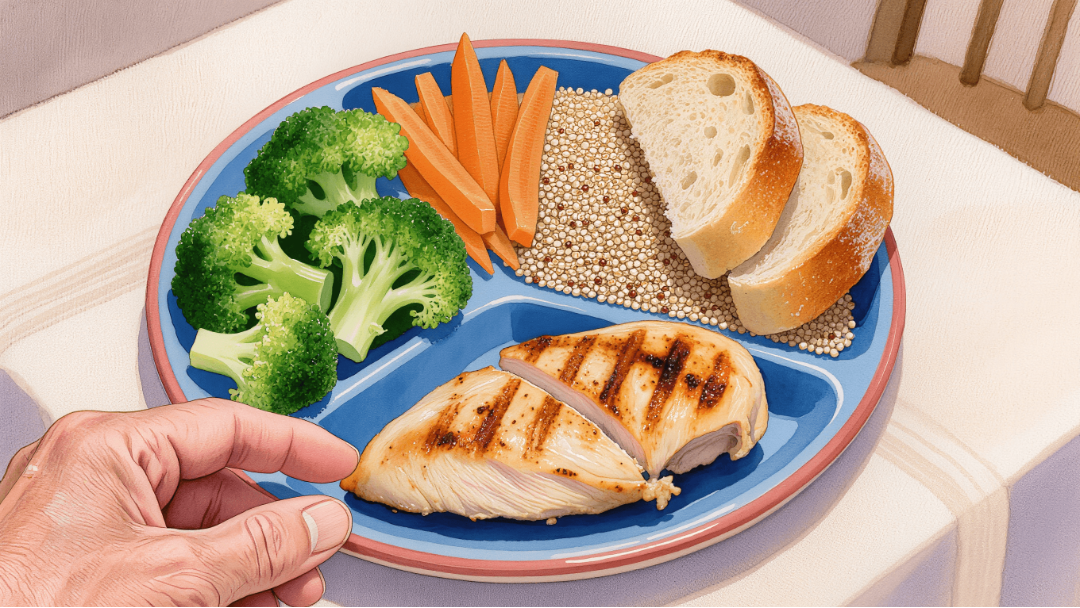
Staying strong after 60 starts with what lands on the plate, and these 7 balanced plate rules 60 plus make that choice much easier. A simple plate method helps adults in every decade, from 20 to 55 and beyond, hit key nutrients that support heart health, brain function, and muscle strength as the years roll on.
Why balanced plates matter
Healthy eating patterns rich in vegetables, fruits, whole grains, lean proteins, and healthy fats are linked to lower risk of heart disease, diabetes, and other age-related conditions. Research using the Healthy Eating Index shows that adults over 60 who follow dietary guidelines tend to have better cognitive performance and overall health.
A plate-based method keeps choices visual and simple. It fits with trusted guides like Harvard’s Healthy Eating Plate and national tools such as MyPlate and the Eatwell Guide, which all emphasize plant foods, whole grains, and healthy fats.
Rule 1: Half plate produce
Most plate models for adults recommend that about half the plate comes from vegetables and fruits, with a focus on non-starchy vegetables. This pattern boosts fiber, vitamins, and minerals, which help digestion, heart health, and healthy aging.
Easy ideas:
- Fill half the plate with leafy greens, broccoli, peppers, carrots, or mixed vegetables.
- Add a piece of fruit or berries as a side or dessert.
Rule 2: Quarter plate whole grains
Guidelines for healthy eating in adults consistently stress choosing whole and intact grains over refined ones. Whole grains like oats, brown rice, barley, and quinoa deliver more fiber and micronutrients and are linked to better cardiovascular health over time.
Aim for roughly a quarter of the plate from whole grains or starchy vegetables. Simple swaps include brown rice instead of white rice, whole grain bread instead of white bread, or roasted sweet potato instead of fries.
Rule 3: Quarter plate protein power
Older adults have higher protein needs to protect muscle and strength, especially beyond age 60. Many experts now suggest at least 1–1.2 grams of protein per kilogram of body weight for older adults, with some recommending up to 1.6 grams per kilogram for adults over 50.
Use about a quarter of the plate for lean protein, such as:
- Fish, poultry, eggs, tofu, or tempeh
- Beans, lentils, and chickpeas
- Low-fat dairy or fortified soy alternatives
Extra rules for 60+ strength
These next 7 balanced plate rules 60 plus help fine-tune the plate for aging muscles, bones, and brain. They blend general healthy eating with the specific needs of older adults highlighted in MyPlate and national guidelines.
Rule 4: Protein at every meal
Spreading protein across the day helps maintain muscle better than loading it at one meal. Practical guides for older adults suggest aiming for a decent protein source at breakfast, lunch, and dinner rather than relying only on the evening meal.
Ideas:
- Breakfast: Greek yogurt with nuts and fruit
- Lunch: Lentil soup with whole grain bread
- Dinner: Baked salmon, quinoa, and vegetables
Rule 5: Fiber for gut and heart
Healthy aging research links higher diet quality and fiber intake to better cardiovascular and metabolic health. Vegetables, fruits, whole grains, beans, and lentils all provide the fiber that supports digestion, blood sugar control, and cholesterol management.
Most adults fall short of fiber targets, so building it directly into each plate works well. Try to include at least one high-fiber item in each meal, such as oats at breakfast, beans at lunch, and a mix of vegetables plus whole grains at dinner.
Rule 6: Smart fats, less salt and sugar
Dietary guidelines encourage limiting saturated fat, added sugars, and sodium to protect heart and brain health, particularly in older adults. Replacing some animal fats and ultra-processed foods with nuts, seeds, olive oil, and fatty fish provides healthier fats that support cardiovascular function.
On the plate, this looks like:
- Using olive or canola oil instead of butter for most cooking
- Choosing unsalted nuts and seeds for crunch instead of salty snacks
- Flavoring with herbs, spices, citrus, and vinegar more often than salt
Rule 7: Hydration on the plate
Older adults may feel less thirst even when their bodies need fluid, so nutrition tools for ages 60+ highlight hydration as a key part of healthy eating. Water-rich foods such as soups, fruits, vegetables, and yogurt help older adults meet fluid needs alongside beverages.
Simple plate strategies:
- Include a broth-based soup, salad, or fruit at each main meal
- Keep water, herbal tea, or sparkling water within reach at the table
Building a sample plate at 60+
When applying the 7 balanced plate rules 60 plus, the goal is not perfection but a steady pattern that supports energy and independence. Healthy Meal Planning tips for older adults emphasize variety across food groups, modest portions, and meals that are enjoyable and realistic to prepare.
A simple example dinner:
- Half plate: roasted carrots, broccoli, and leafy green salad
- Quarter plate: quinoa or brown rice
- Quarter plate: grilled fish or tofu, plus a drizzle of olive oil and a slice of fruit for dessert
Over time, consistently following this style of plate aligns closely with evidence-based patterns like the Mediterranean-style diet, which is linked to healthier aging and lower risk of chronic disease. It also provides a strong base for active adults across ages 20–55 who want to age well and keep up with work, family, and fitness.
FAQ: Balanced plate questions (FAQ schema-ready)
1. What is a balanced plate for adults over 60?
A balanced plate for adults over 60 usually means half the plate from vegetables and fruits, one quarter from whole grains, and one quarter from lean protein. This pattern follows major dietary guidelines and supports muscle, heart, and brain health as people age.
2. How much protein should someone over 60 eat each day?
Many experts recommend older adults aim for at least 1–1.2 grams of protein per kilogram of body weight per day, which is higher than the minimum for younger adults. Some groups suggest up to 1.6 grams per kilogram for people over 50, especially those who want to protect muscle and stay active.
3. Why do seniors need more protein at each meal?
Aging muscles respond less strongly to small protein doses, so spreading enough protein across breakfast, lunch, and dinner helps maintain strength and function. This approach is often recommended alongside resistance exercise to lower the risk of sarcopenia, the age-related loss of muscle.
4. How can adults 20–55 use these 7 balanced plate rules 60 plus?
Younger adults can use the same plate rules to build habits that protect long-term health before age-related changes accelerate. Following a pattern rich in plants, whole grains, and lean protein in midlife is linked with better cardiovascular and cognitive health later on.
5. What are good whole grain choices for older adults?
Good options include oats, brown rice, quinoa, barley, whole wheat pasta, and whole grain bread, all of which provide more fiber and nutrients than refined grains. Plate-based guides encourage using whole grains for roughly a quarter of the meal to support steady energy and digestive health.
6. How can a balanced plate help with weight management after 60?
Filling half the plate with low-calorie, high-fiber vegetables and fruits helps control portions of higher-calorie foods while still feeling satisfied. Studies of healthy dietary patterns show that diets rich in plant foods and whole grains support healthier body weight and metabolic markers.
7. Are healthy fats important on a balanced plate for seniors?
Yes, guidelines advise replacing some saturated fat with unsaturated fats from foods like olive oil, nuts, seeds, and fatty fish to support heart and brain health. These fats fit into the plate as cooking oils, salad dressings, or small toppings rather than large portions on their own.
8. How does a balanced plate support brain health in older adults?
Higher scores on healthy eating indexes, which reflect diets rich in vegetables, fruits, whole grains, and healthy fats, are associated with better performance on memory and thinking tests in adults over 60. Patterns similar to the Mediterranean diet appear especially helpful for brain aging and may delay cognitive decline.
9. Can a balanced plate work with diabetes or heart disease?
Yes, plate methods that emphasize non-starchy vegetables, whole grains, lean proteins, and limited added sugars are commonly recommended for managing blood sugar and heart risk. People with medical conditions should still follow advice from their own healthcare team and adjust portions, carbohydrates, and sodium as directed.
10. What if chewing or appetite is a problem after 60?
Guides for older adults suggest softer, nutrient-dense foods like scrambled eggs, yogurt, smoothies, soups, stews, and cooked vegetables when chewing is difficult. Smaller, frequent meals using the same balanced plate ideas can also help when appetite drops, so total intake still covers key nutrients.
Conclusion and next steps
Using the 7 balanced plate rules 60 plus creates a simple framework that supports healthy weight, strong muscles, and steady energy from midlife onward. This plate style lines up with major evidence-based guidelines, from the Dietary Guidelines for Americans to MyPlate and other national food guides.
For a deeper dive into portion sizes, meal planning templates, and example day menus that apply these rules across breakfast, lunch, dinner, and snacks, link readers to a dedicated Balanced Nutrition page on the same site. That page can expand on lab values, special conditions, and sport-specific needs while this post remains a quick, mobile-friendly guide for daily use.